Renault Zoe (2013–2024) Review for Young Drivers: Insurance, Battery Lease and the Best Variant to Buy
The wrap
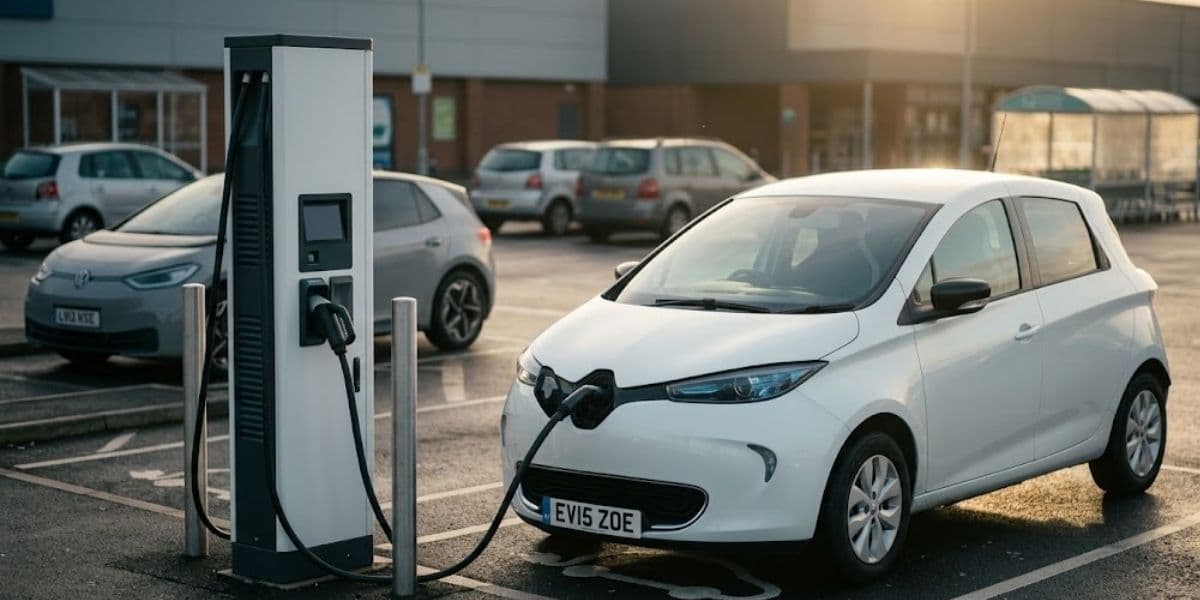
The Renault Zoe is a cheap way for a young driver to get into an electric car in 2026. Insurance groups start at 13, which is high compared to petrol cars but low for an EV. A 2020 Phase 2 model with the 52kWh battery does up to 200 miles in summer (which is decent), costs about 2p a mile to run on an off-peak home tariff and is easy to drive. It's a decent option for a teenager driving short journeys with a charger at home.
There area some trade-offs. Euro NCAP gave the facelifted Zoe a zero-star rating in 2021 (although pre-facelift was 5 stars!). Early models came with a battery lease scheme that can land an unsuspecting owner with a £2,000 buyout fee if the car gets written off. If you're considering a Zoe, do your due dilligence on the specific example you're looking at. It's complicated.
Quick facts
| Metric | Value |
|---|---|
| Phases covered | Phase 1 (2013-2019), Phase 2 (2019-2024) |
| Insurance Groups | 13–24 depending on motor and battery |
| Used Price Range | £3,000–£14,000 |
| Euro NCAP | 5 stars (2013 test); 0 stars (2021 retest of Phase 2) |
| Best Variant | Phase 2 R135 in Iconic “i” spec, 52kWh battery |
| Real-world range | 90-100 miles (22kWh) / 160-180 miles (41kWh) / 200-230 miles (52kWh) |
| Annual Road Tax | £200 (registered April 2017 onwards); £20 (pre-April 2017) |
| Est. Annual Running Cost | £2,200–£3,400 for a 17-21 year old with home charging |
| Common Issues | Motor bearing whine, 12V battery failure, battery lease contracts, suspension wear, AC compressor faults |
Insurance groups sourced from ABI/Thatcham Research. Real-world range based on owner-reported data and EV Database figures. Running costs assume 8,000 miles, off-peak home tariff and a telematics policy.
Who is this car for?
The Zoe suits new drivers who can charge at home and stick to short or medium journeys. The price-to-tech ratio is excellent but newer cars are less safe and older cars have a weird battery lease scheme.
Perfect for:
- 17-21 year olds with a driveway and a home charger on a smart EV tariff
- Students or apprentices doing short urban or suburban runs (under 50 miles a day)
- Parents who want to lock in low fuel costs and avoid manual gearbox drama for a new driver
- Anyone with a £6,000-£10,000 budget who wants a modern-feeling EV
Not ideal for:
- Drivers without off-street parking. Public rapid charging at 76p/kWh wipes out the running-cost advantage
- Regular motorway commuters. The 50kW DC charging cap and weak high-speed efficiency make long trips slow
- Safety-first parents who want modern Euro NCAP-rated active protection. The 2021 zero-star rating is a problem
- Anyone tempted by a sub-£3,500 Phase 1 car. Most still carry an active battery lease with hidden buyout liabilities
For the broader picture on EV ownership at this age bracket, read our electric cars for young drivers guide.
"The Zoe is great to drive around town, it's also a hoot down a country lane. Overtaking performance is good too, although you'll notice that the Zoe starts to run out of puff if you stray over 70mph."
The two phases: Phase 1 vs Phase 2
The Zoe was facelifted heavily in late 2019 rather than fully replaced. Two outwardly similar cars on the used market can have completely different batteries, motors, charging speeds and tech. Pick the phase first, then narrow down on motor and battery within it.
| Phase 1 (2013-2019) | Phase 2 (2019-2024) | |
|---|---|---|
| Battery options | 22kWh (2013-16), 41kWh ZE40 (2016-19) | 52kWh ZE50 |
| Motor options | Q210 (43kW AC), R210, R240, R75, R90, R110 | R110, R135 |
| DC rapid charging | None on most; rare 43kW AC on Q210 cars | Optional 50kW CCS |
| Real-world range | 90-180 miles | 200-230 miles |
| Battery ownership | Mostly leased (Mobilize Financial Services) | Mostly owned outright (“i” spec) |
| Interior | Hard plastics, basic infotainment | 9.3” touchscreen, soft-touch trim, recycled materials |
| Used price | £3,000-£6,500 | £6,500-£14,000 |
| Insurance Groups | 16-23 | 13-24 |
The Phase 2 has the bigger battery, faster DC charging, owned battery on most examples, plus a nice interior. But they're unsafe. Phase 1 cars are safer and cheaper but the battery lease complexity and 90-mile winter range cancel out the saving for most buyers.
"Small, but perfectly formed. These cars are a perfect second motor or teeny family wagon... designed to cope with everything you can throw at them."
Driving and performance
The Zoe is nice to drive. No gears to change, instant torque off the line, light steering and a high seating position that feels good. Lift off the accelerator and the car regenerates energy back into the battery, which takes a couple of journeys to get used to and then becomes second nature.
The R110 motor (Phase 2) is fine for town and A-road driving. The R135 (also Phase 2) adds noticeable punch for motorway slip roads and rural overtakes. On Phase 1 cars, the R90 and R110 motors do the job in town but feel breathless above 60mph. Avoid the original Q210 unless you specifically want the 43kW AC charging.
Above 70mph the Zoe runs out of aerodynamic efficiency. The body is tall and short, which is great for parking and visibility but crap on the motorway. Sustained 70mph driving on a 52kWh ZE50 cuts the real-world range to around 130-150 miles. Below 50mph the regenerative braking does most of the heavy lifting and efficiency climbs above 4 miles per kWh.
The brakes hardly get used due to the re-gen. Many Zoes do 50,000 miles before they need front pads because the regen system handles the deceleration. That's a small but real ownership saving over a petrol equivalent.
Technology and interior
The Phase 2 facelift transformed the cabin. It has a 9.3-inch portrait touchscreen and a 10-inch digital instrument cluster on higher trims. Apple CarPlay and Android Auto are standard from Iconic spec upwards. The materials feel goood for a car at this price point. The recycled fabric upholstery on later cars looks better than the hard plastics of the Phase 1.
Phase 1 cars have a smaller portrait screen running an older Renault system. CarPlay and Android Auto came in late through 2018 on selected trims but the system is slow and the graphics look dated. If smartphone connectivity is super-important then opt for a post-2018 Phase 2.
Boot space is 338 litres on the Phase 2 with the rear seats up. Bigger than the SEAT Ibiza, bigger than the Vauxhall Corsa and a fraction smaller than the Renault Clio. Rear leg room is tight, two adults will fit but only just.
The Renault companion app handles battery pre-conditioning for charging. The car heats or cools while plugged into the charger so it draws power from the grid rather than the battery. The app is glithcy - owners report dropped server connections and failed requests.
Safety: the 2021 Euro NCAP downgrade
This is a weird part of the Zoe story worth understanding.
The Zoe was launched in 2013 with a five-star Euro NCAP rating. When Euro NCAP retested the facelifted Phase 2 model in December 2021, it scored zero stars. One of only three cars in Euro NCAP's history to score zero. The car became less safe but the safety standards also increased.
Renault swapped the original combined head-and-thorax side airbag for a thorax-only version during the facelift, which left the driver's head exposed in side pole impacts. Test data showed direct head contact with the intruding pole. Second, the car was missing standard active safety kit (autonomous emergency braking, lane keep assist) that Euro NCAP's 2021 protocol demands as a baseline.
"The new Zoe offers poor protection in crashes overall, poor vulnerable road user protection and lacks meaningful crash avoidance technology, disqualifying it for any stars."
A few things to keep in perspective. The zero star rating was harsh to say the least, it's not a death trap. The Zoe still meets every UK statutory homologation safety requirement. The chassis and crumple zones haven't changed since the original five-star design of the pre-facelift version. A zero-star modern car is not less safe than a 20 year old hatchback that pre-dates side airbags entirely. But against a Volkswagen Polo or a 2017+ SEAT Ibiza, the Zoe is meaningfully behind on both passive and active protection.
If top safety scores is a non-negotiable for the parent buying this car, the Zoe is not the right choice. For more on the developmental side of young driver risk, our teen brain and young driver safety guide is worth a read.
The battery lease minefield
The battery situation on early Renault Zoes is the other weird thing.
When the original Zoe launched in 2013, Renault sold the car body to the customer but kept legal ownership of the battery. The owner paid a monthly battery rental fee to RCI Financial Services (now Mobilize Financial Services), starting around £50/month for low-mileage drivers and rising to £124/month for unlimited mileage contracts. By early 2020 Renault dropped the lease scheme entirely and let existing owners buy out their batteries.
Most Phase 2 cars are owned outright. These are the “i” spec cars (Iconic i, GT Line i, etc.). The “i” in the trim name is the signal you want.
Phase 1 cars are mostly still on active battery leases. They are advertised £3,000-£6,000 cheaper than equivalent owned-battery cars because of this lease situation.
What goes wrong
The lease contract doesn't end when the car is sold. It transfers to the new owner. If your 17 year old buys a £3,200 Zoe with a leased battery, they inherit the £50-£100/month direct debit and the legal obligation that goes with it.
The serious problem is the end-of-life scenario. If the car is written off in an accident, or needs an uneconomical repair (a £3,000 motor replacement on a £3,500 car), the lease doesn't simply vanish. Mobilize requires the lease to be settled before the car can be scrapped. The owner has two options:
- Pay around £400 to a Renault dealer to physically remove the battery and return it to Mobilize
- Pay the full battery buyout fee (often £1,500-£2,200 on older 22kWh batteries) to take ownership before scrapping
That's a £400-£2,200 hit on top of losing the car. For a teenager whose first crash is statistically more likely than the average driver's, this is a real risk to put on the table at the time of purchase.
How to handle it on a viewing
- Look for “i” in the trim name. If it's there, the battery is owned outright. Confirm in writing on the V5C and any Renault paperwork
- If it's a leased example, ask the seller to confirm the buyout cost in writing from Mobilize before agreeing a price. Then add that buyout figure to the asking price and decide whether the deal still works
- Avoid Phase 1 cars at the bottom of the market unless you have explicitly priced in the buyout
For a wider checklist of what to inspect on any used car, see our used car inspection guide for young drivers.
Range, charging and 2026 energy economics
Range anxiety on a Zoe is a function of which battery you've got, how cold it is and what your charging setup looks like.
| Battery | Years | Real-world summer range | Real-world winter range | DC rapid charging |
|---|---|---|---|---|
| 22kWh | 2013-16 | 90-100 miles | 60-75 miles | None on most |
| 41kWh ZE40 | 2016-19 | 160-180 miles | 110-130 miles | None on most |
| 52kWh ZE50 | 2019-24 | 200-230 miles | 140-160 miles | Optional 50kW CCS |
Cold weather knocks 30-40% off range on any lithium battery EV. The Zoe is no worse than rivals in this respect. It has less range to give up in the first place. Pre-conditioning while plugged in (heating the cabin from grid power, not battery power) recovers a chunk of that loss in winter.
Home charging
For a household on a smart EV tariff, the Zoe is cheap to fuel.
The Ofgem price cap for April-June 2026 sits at 24.67p/kWh on a standard variable tariff. A full 0-100% home charge of a 52kWh ZE50 costs about £12.82. At a real-world 3.8 miles/kWh that's roughly 6.4p/mile on standard rates.
Smart EV tariffs (Octopus Go, Intelligent Octopus, EDF GoElectric, OVO Charge Anytime) drop overnight rates to 7-9p/kWh. A full charge then costs £4-£6, working out at about 1.5-2p/mile. A petrol Ford Fiesta costs around 14-18p/mile in fuel by comparison.
Public charging
This is one of the main issues with EV ownership in the UK. Average UK rapid charging in 2026 sits at around 76p/kWh. A 10-80% top-up on a 52kWh Zoe costs about £27.60. That's nearly 19.5p/mile, way more expensive than running a small petrol car!
Two specific limitations make the Zoe particularly painful as a public-charging-only EV:
- 50kW CCS maximum. A 10-80% top-up takes about 70 minutes. Modern rivals charge at 100-150kW and do the same in 25-35 minutes
- Most Phase 1 cars have no DC fast charging at all. They top up at 22kW AC speeds on destination chargers, which means several hours per charge
The Zoe only makes sense if you can charge it overnight at home on a smart EV tariff, otherwise it's too expensive to run.
Running costs and ownership
Insurance
Insurance is a major first-year cost young drivers and it's even worse for EVs. The bodywork is expensive to repair, the battery is expensive to replace and the supply of EV-certified body shops is still limited.
That said, the Zoe is relatively more insurable than many other EVs for the 17-21 demographic. It sits well below a Tesla Model 3 (Group 46-50, effectively uninsurable for a teenager) and a Nissan Leaf (typically Group 21-27 depending on age). The Zoe's modest acceleration and small dimensions limit potential third-party damage.
| Trim and battery | Insurance Group |
|---|---|
| Zoe Dynamique Intens (22kWh) | 16 |
| Zoe Dynamique Nav (22kWh / 41kWh) | 17 |
| Zoe Play 80kW R110 (52kWh) | 18 |
| Zoe Iconic R135 (52kWh) | 13-16 |
| Zoe Techno 100kW R135 (52kWh) | 18 |
| Zoe SE 100kW R135 (52kWh) | 19 |
| Zoe S Edition 100kW R135 (52kWh) | 23 |
| Zoe GT Line i R135 (52kWh) | 24 |
Real-world quotes for a 17-21 year old as the main policyholder typically come back at £1,800-£2,100 a year on a black box policy. For a full breakdown of how insurance groups translate into real quotes, read our car insurance groups explained guide. If a parent is considering being the main driver instead, our named driver vs own policy guide covers what is and isn't legal.
Road tax (VED)
The blanket EV road tax exemption ended on 1 April 2025. For the 2026/27 tax year:
- Zoes registered between April 2017 and March 2025 pay the standard £200/year flat rate
- Zoes registered before April 2017 pay £20/year
- The £40,000 list-price luxury supplement does not apply (Zoe was always under that threshold)
Servicing
Electric drivetrains have far fewer parts to wear out than petrol engines. There's no oil to change, no spark plugs, no timing belt. But EVs do go through tires more quickly because of the extra weight of a battery. Servicing costs are still present sadly because the high-voltage battery thermal management system needs maintenance.
| Service | Independent (Kwik Fit / similar) | Renault main dealer |
|---|---|---|
| Standard EV service | £225-£250 | £350-£400 |
| Comprehensive E-Tech service (inc. coolant change) | n/a typically | £540 |
| Coolant change (every 5 years) | £180-£250 | Included in E-Tech service |
| 12V battery replacement | £90-£140 | £160-£220 |
Skipping the 5-yearly coolant change voids the high-voltage battery warranty and risks the battery overheating during rapid charging. It's the one piece of routine work you can't economise on.
Warranty
The vehicle warranty story is messy. Pre-December 2019 cars had a 3-year/60,000 mile warranty. Late 2019 to early 2023 cars were sold with a 5-year/100,000 mile warranty. Late 2023 cars went back to 3 years.
The high-voltage battery is covered separately by an 8-year/100,000 mile warranty, which guarantees 70% original capacity for that period. A 2020 car still has this protection until 2028.
Annual running cost (17-21 year old)
| Cost item | Phase 1 41kWh (home charge) | Phase 2 52kWh (home charge) | Phase 2 52kWh (public charge only) |
|---|---|---|---|
| Insurance (telematics) | £1,800-£2,100 | £1,800-£2,100 | £1,800-£2,100 |
| Charging (8,000 miles) | £150-£200 (off-peak) | £150-£200 (off-peak) | £1,500-£1,600 (rapid) |
| Road tax | £20 | £200 | £200 |
| Servicing | £200-£250 | £200-£250 | £200-£250 |
| Total | £2,170-£2,770 | £2,370-£2,770 | £3,700-£4,150 |
A home-charged Phase 2 Zoe is a cheap car to run for a young driver, but a public-charged one isn't.
What to watch: known issues
The Zoe's electric drivetrain is generally robust. The peripheral systems are where the trouble usually starts. The 2024 What Car? reliability survey ranked the Zoe 11th out of 18 EVs with an 86% score. MotorEasy warranty data shows suspension complaints account for 64% of Zoe claims and electrical issues for 27%, with average electrical repair costs of £286.
Motor bearing whine (R90, R110, R135)
A high-pitched whine under hard acceleration on cars between 60,000 and 80,000 miles. Caused by internal motor bearing wear. If ignored, it leads to complete motor failure and a £2,500-£3,500 replacement bill. Listen for it on a test drive at 30-40mph under firm throttle.
12V battery failure (all Zoes)
The 12V lead-acid battery powers the computers and contactors. When it dies, the dashboard lights up with multiple errors and the car won't start. Standard 3-4 year replacement cycle like any other car. Budget £100-£150. The 2024 What Car? survey listed 12V battery failure as the most common Zoe owner gripe.
Suspension wear (all Zoes, especially Phase 2)
The Zoe is heavy for a supermini because of the floor-mounted battery. Front top mounts and anti-roll bar drop links wear faster than they would on a petrol equivalent. Listen for clunks over speed bumps. Replacement is straightforward at any independent: budget £150-£300 for drop links or top mounts.
AC compressor and heat pump (Phase 2 specifically)
The air conditioning compressor is part of the battery thermal management loop. Failure means the battery can't be cooled during rapid charging and the cabin heater struggles in winter. Test that the AC blows cold during a viewing, regardless of the season.
Reversing camera glitches (Iconic, GT Line)
Higher-spec Phase 2 trims are known for intermittent reversing camera failure. Software updates fix some cases. A hardware replacement runs £200-£350.
Battery lease status (Phase 1 mostly)
Already covered above. Worth saying again: confirm in writing whether the battery is owned or leased before any money changes hands.
Viewing checklist
- Confirm battery ownership in writing on the V5C and any Renault paperwork. “i” in the trim name is the signal
- Test drive from a cold start. Listen for motor whine at 30-40mph under firm throttle
- Run the AC. Make sure it blows cold in any season
- Plug it into a 7kW charger if possible. Check the charge initiates and the car reports the correct max rate
- Get the SOH (state of health) reading via the Renault dealer or a third-party tester. Anything below 85% on a 4-6 year old battery is a bargaining flag
- Check the Government MOT history online for repeated brake or suspension advisories
- Verify the 8-year battery warranty status with a Renault dealer using the VIN
The best variant to buy
The low insurance pick: 17-21 year old with home charging
2020-2022 Phase 2 Zoe Iconic R135 in “i” spec, 52kWh battery, with the 50kW CCS option.
- Insurance Group: 13-16
- Tech: Apple CarPlay, 9.3” touchscreen, digital cluster
- Battery: Owned outright
- Range: Real-world 200-230 miles in summer
- Budget: £8,000-£11,000 with a clean service history and SOH report
Iconic strikes the balance: enough kit to feel modern, lower insurance group than GT Line, owned battery, fastest motor for confident motorway use when needed.
Budget pick (£5,000-£7,000)
2018-2019 Phase 1 ZE40 R90 or R110 in Dynamique Nav i.
- Insurance Group: 17
- 41kWh battery, 160-180 miles real-world
- “i” specification means battery is owned
- Slower DC charging (or none on some) but fine for home charging users
Avoid this generation if the battery isn't owned outright. The price gap to leased examples isn't worth the buyout exposure.
Tight budget (under £4,000)
The Zoe is hard to recommend at this end of the market. The cars in this bracket are mostly Phase 1 22kWh cars with active battery leases and 90-mile summer ranges. A petrol Hyundai i10 or a Fiat 500 is a more sensible buy at this budget. If a small EV is the only acceptable answer, our best automatic first cars guide covers cheaper alternatives.
Avoid
- Any Phase 1 Zoe with an active battery lease where the buyout cost hasn't been confirmed in writing
- The original Q210 motor unless the seller has documentation of recent service work
- Any car without an SOH (state of health) reading from a Renault dealer or independent tester
- Public-charging-only households. The economics break down without home charging
For low emission zone considerations, all Zoes are fully ULEZ exempt as zero-emission vehicles. See our ULEZ for young drivers guide and low emission zones for young drivers guide for the wider regional picture.
The verdict
The Renault Zoe is a wierd car. For the right driver in the right circumstances it's one of the cheapest first cars to run in the UK in 2026. For the wrong situation it's a potential nightmare.
The ideal Zoe owner has a driveway, a home charger, a smart EV tariff and a daily commute that fits inside the battery's winter range. For that person, a Phase 2 Iconic on the 52kWh battery is a good option. Insurance is reasonable for an EV, fuel costs drop to under 2p a mile and the absence of a gear stick takes one whole skill out of the early-driving learning curve.
For most other people, the picture is harder. The 2021 zero-star Euro NCAP rating is a safety concern against a modern Volkswagen Polo or SEAT Ibiza. The 50kW DC charging cap rules out road trips. The Phase 1 battery lease scheme has stranded several owners with hidden buyout costs. And the £200 annual VED erases one of the original financial perks.
Pros
- Cheapest EV to insure for new drivers (Group 13 entry point)
- 1.5-2p/mile running cost on home off-peak charging
- No gearbox or clutch, easier for new drivers to focus on the road
- 200-230 mile real-world range on 52kWh ZE50
- Phase 2 interior feels modern, with CarPlay and Android Auto standard from Iconic
- 8-year battery warranty (70% capacity) on Phase 2 cars
Cons
- Zero-star Euro NCAP rating from the 2021 Phase 2 retest
- 50kW DC charging cap makes long trips slow
- Phase 1 battery lease scheme can hide a £2,000+ buyout fee
- High-speed efficiency is poor; range collapses above 70mph
- Renault companion app is unreliable
- Motor bearing whine, suspension wear and 12V battery failure are common ownership annoyances
Final word
The one to buy: 2020-2022 Phase 2 Iconic R135 i, 52kWh ZE50 battery, with a clean service history, a confirmed SOH reading and home charging waiting at the other end. Budget £8,000-£11,000.
Skip the rest. Public charging, leased batteries and budget-end Phase 1 cars all turn the Zoe from a smart buy into a slow-motion accident.
If you're weighing the Zoe against more conventional alternatives, our best first cars under £3,000 guide and best first cars 2026 cover the petrol options. If electric is the goal, our electric cars for young drivers guide is the right next step.