UK Low Emission Zones Explained: What Young Drivers Need to Know in 2026
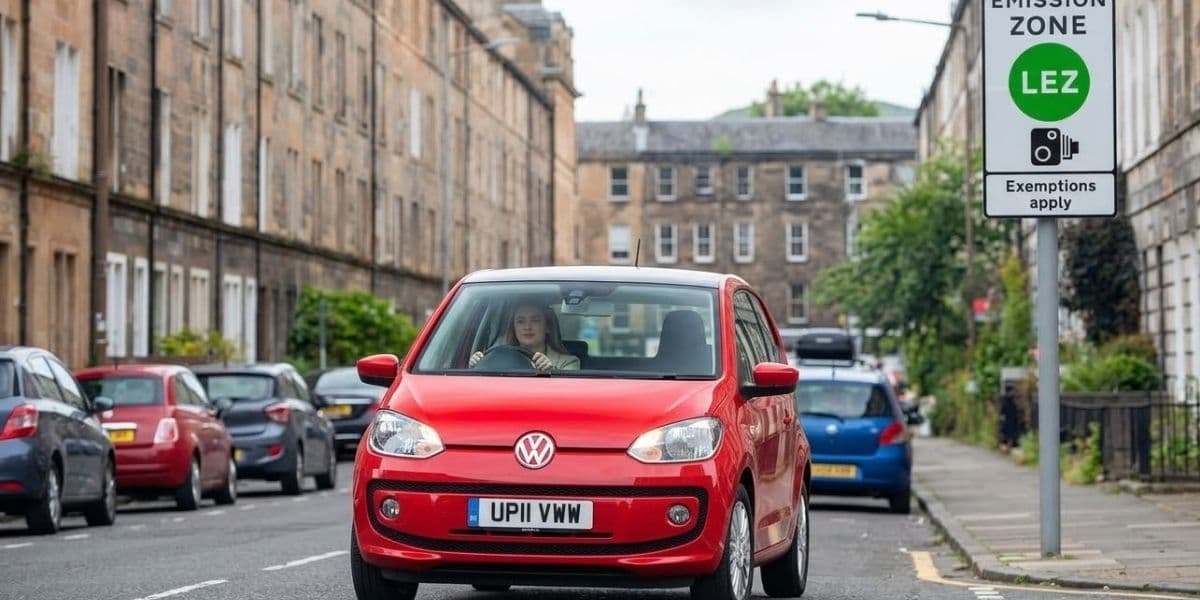
The short version
If you're buying your first car in 2026, emission zones will affect which car you should buy. But you don't need to stress about it. Almost any petrol car registered after 2006 is compliant everywhere in the UK. Diesels became compliant from around 2016. There are now charging zones in London, Birmingham, Bristol, Bath, Bradford, Sheffield, Newcastle and all four major Scottish cities. A non-compliant car driven daily into one of these zones could cost you over £2,000 in a year (source: RAC, TfL).
What are low emission zones and why should you care?
Low emission zones are areas in UK cities where older, more polluting cars are either charged a daily fee or banned outright. The goal is reducing toxic gases like nitrogen oxides (NOx) and particulate matter (PM2.5 and PM10), the pollutants that cause respiratory and cardiovascular problems. This isn't about CO2 or climate change.
There are three types of zone operating in the UK right now:
| Zone type | Where | How it works | Daily charge |
|---|---|---|---|
| ULEZ (Ultra Low Emission Zone) | London (all boroughs inside the M25) | Daily charge for non-compliant cars | £12.50 |
| CAZ (Clean Air Zone) | Birmingham, Bristol, Bath, Bradford, Sheffield, Newcastle | Daily charge for non-compliant cars | £8.00-£9.00 |
| LEZ (Low Emission Zone) | Glasgow, Edinburgh, Dundee, Aberdeen | Outright ban on non-compliant cars (fines, not charges) | N/A (fines from £60, doubling each offence) |
The Scottish system is the strictest. There's no option to pay and drive. If your car doesn't meet the standard, you can't enter without a fine. Get caught by an ANPR camera and the fines escalate fast: £60 first offence, £120 second, £240 third, £480 fourth.
"Everyone wants cleaner air but for those that can't afford to upgrade their cars and now face being priced off the road, the daily charges are a threat to their health, their well-being, their safety and family life."
— Edmund King, president of the AA
For young drivers entering the used car market, this adds some more complexity to the buying equation. You're not just looking at insurance groups, reliability and price anymore. You need a car that won't get charged or fined every time you drive into a city centre.
Compliant engines: Euro 4 (petrol) and Euro 6 (diesel)
Every car sold in the UK is built to a European emission standard. The two thresholds you need to know:
Petrol cars: Euro 4 or newer. This covers most petrol cars registered from approximately January 2006 onwards. If you're buying a petrol car from 2006 or later, you're almost certainly compliant everywhere in the UK.
Diesel cars: Euro 6 or newer. This only covers diesels registered from approximately September 2015 onwards. Older diesels (Euro 5 and below) fail the standard and will be charged or banned.
This is why petrol is the default choice for young drivers on a budget. The compliance threshold for petrol is 20 years old. For diesel, it's only about 10 years old. That means if you get a cheap "old smoker" then you might not be able to drive it in city centres without a charge / fine.
You can check any car's compliance for free. Enter the registration number on the government CAZ checker or the TfL ULEZ checker.
Where exactly are the Low Emission Zones?
Here's every active zone in the UK as of 2026:
England
London ULEZ covers almost all of Greater London, bordered by the M25. The zone was expanded in August 2023 and charges £12.50 per day for non-compliant cars, vans and motorbikes. Failure to pay results in a £180 Penalty Charge Notice (reduced to £90 if paid within 14 days). According to the Mayor of London's office, roadside nitrogen dioxide concentrations fell by 20% in outer London during the first year of the expanded ULEZ (source: Greater London Authority).
Birmingham CAZ (Class D) covers the inner ring road area and charges £8.00 per day for non-compliant cars. Class D means private cars are included, not just commercial vehicles.
Bristol CAZ (Class D) charges £9.00 per day. The zone covers the city centre and parts of the inner ring.
Bath CAZ (Class C) only charges commercial vehicles, taxis and buses. Private cars are exempt regardless of emission standard. If you're a young driver in Bath, you don't need to worry about this one.
Bradford CAZ (Class C) also exempts private cars. Commercial vehicles and taxis only.
Sheffield CAZ (Class C) same as Bradford. No charge for private cars.
Newcastle CAZ (Class C) private cars are currently exempt.
Scotland
Scotland's Low Emission Zones work differently. Non-compliant cars are banned outright from the zone boundaries. ANPR cameras enforce the restriction and fines escalate with each offence.
All four zones went live for all vehicle types (including private cars) on 1 June 2024:
| City | Zone coverage | Standard required |
|---|---|---|
| Glasgow | City centre (bounded by the M8 motorway) | Euro 4 petrol / Euro 6 diesel |
| Edinburgh | City centre | Euro 4 petrol / Euro 6 diesel |
| Dundee | City centre (Lochee Road to Dock Street corridor) | Euro 4 petrol / Euro 6 diesel |
| Aberdeen | City centre | Euro 4 petrol / Euro 6 diesel |
The penalty structure in Scotland compounds quickly. First offence: £60. Second: £120. Third: £240. Fourth: £480. There's no "pay to enter" option. Your car either meets the standard or it doesn't go in.
How much could this actually cost you?
The financial impact depends entirely on how often you drive into a zone. Here's what the numbers look like for a non-compliant car:
Occasional visitor (once a month into Bristol): £9 x 12 = £108 per year. Annoying, but manageable. Probably cheaper than upgrading your car.
Daily commuter into Birmingham: £8 x 5 days x 46 working weeks = £1,840 per year. That's more than many young drivers spend on the car itself.
Daily commuter in London: £12.50 x 5 days x 46 weeks = £2,875 per year. At this point, you'd spend less on monthly finance payments for a compliant car.
The break even point is clear. If you're driving into a zone more than two or three times a week, then you're as well looking for a Euro 4 petrol or Euro 6 diesel.
The cheap diesel risk
Young drivers scrolling through AutoTrader or Facebook Marketplace will spot plenty of 2010–2014 diesel hatchbacks at tempting prices. A 1.6 diesel Fiesta or Polo for £1,500 can look like a steal next to a £4,000 petrol equivalent.
But there’s a reason they’re so cheap - these cars are being offloaded by urban owners trying to avoid daily emission charges. If you’re mainly doing longer journeys and live outside a city, a diesel could still make sense. Petrol cars are better suited to short, stop-start driving and are more likely to meet Euro 4 standards. By contrast, every Euro 5 diesel (pre-2015) fails the emissions rules in UK low emission zones.
The rule for young drivers is simple: buy petrol, registered 2006 or later. If you want to be completely safe, buy petrol from 2010 onwards and you'll meet Euro 5 with room to spare.
Five compliant first cars that make sense in 2026
Every car listed sits in low insurance groups, meets all UK emission zone standards and is available on the used market at affordable first car prices. Context on why insurance groups matter so much: according to Quotezone data for 2026, average annual premiums for 17 year olds range from £1,940 in the East Midlands to £2,798 in London (source: Quotezone/Insurance Edge). WTW data shows premiums have dropped around 13% year on year, but young driver cover is still the single biggest cost of car ownership at this age. Picking a car in groups 1 to 5 is the most effective way to keep the costs down. A telematics policy is pretty much essential for the first couple of years.
| Car | Used price (2026) | Insurance groups | Compliance | Best for |
|---|---|---|---|---|
| VW Up / Skoda Citigo / SEAT Mii | £3,000-£8,000 | 1-3 | All petrol models compliant (Euro 5/6) | Best all-rounder for the money |
| Hyundai i10 | £3,000-£8,000 | 1-2 | All post-2008 petrol compliant | Cheapest to insure |
| Kia Picanto | £4,000-£8,000 | 3-5 | All post-2008 petrol compliant | Warranty protection (7 year Kia warranty) |
| Toyota Aygo / Peugeot 108 / Citroen C1 | £1,500-£5,000 | 1-3 | All petrol from 2005 onwards compliant | Tightest budgets |
| Ford Fiesta (2008-2017, petrol only) | £3,000-£8,000 | 3-10 | 1.25 Duratec and 1.0 EcoBoost petrol compliant | More space and motorway ability |
A few things worth knowing about these cars
The VW Up / Skoda Citigo / SEAT Mii triplets are mechanically identical. Built on the same line in Slovakia. The Skoda Citigo and SEAT Mii are usually £500 to £1,000 cheaper than the VW badged version for the same car. The 1.0 litre three cylinder engine sits in insurance group 1 and returns around 50 to 60 mpg. Every model on the used market is compliant because production started in 2011/2012, well past the Euro 4 cutoff.
The Hyundai i10 consistently appears in insurance industry lists as one of the cheapest cars to cover. Second generation models (2014 onwards) are the sweet spot: five doors as standard, modern safety kit and excellent visibility for nervous new drivers parking in tight spaces.
The Kia Picanto shares its platform with the Hyundai i10 but looks sportier. The Kia has a seven year warranty. Buy a 2019 Picanto in 2026 and you still have warranty coverage remaining.
The Toyota Aygo (and its siblings, the Peugeot 108/107 and Citroen C1) is the budget champion. The 1.0 litre Toyota engine uses a timing chain instead of a belt, making it practically bulletproof with regular oil changes. Even 2005 models meet Euro 4. You can buy a running, compliant Aygo for £1,500 and drive through central London without paying a penny in emission charges.
The Ford Fiesta is the step up if you need more space or motorway comfort. Stick to the 1.25 Duratec petrol. Avoid all diesel Fiestas from this era: the 1.4 TDCi and 1.6 TDCi are Euro 5 diesels and non-compliant. One specific warning on the 1.0 EcoBoost: models before 2020 have a "wet belt" (timing belt running in oil) that needs replacing on schedule. Skip this service and the engine is destroyed. Budget for it or buy the simpler 1.25 Duratec.
When you don't need to worry about emission zones
Not everyone needs to care about this. If you live in a rural area, a coastal town or anywhere without a major urban zone nearby, emission compliance is largely irrelevant to your daily driving.
Drivers in Cornwall, North Yorkshire, Cumbria or the Scottish Highlands can run older diesels without ever triggering a charge or fine. The aggressive depreciation of non-compliant cars in cities actually creates buying opportunities in rural areas. Reliable pre-2015 diesel estates and SUVs are being sold cheaply by urban owners to avoid charges. If you'll never drive into a zone, these can be excellent value. Alternatively, an electric car is exempt from all emission zones.
If you do occasionally visit a city with a zone, modern sat nav helps. Google Maps and Waze both offer emission zone avoidance routing. Waze lets you input your car's emission status and automatically routes you around zone boundaries. Most cities also have Park and Ride facilities deliberately placed outside the zone perimeter.
How to check if a specific car is compliant
Before you pay a deposit on any car, check its compliance. It takes 30 seconds.
- Get the registration number from the seller's advert or the car itself
- Go to the government Clean Air Zone vehicle checker for English zones
- Go to TfL's ULEZ checker for London specifically
- For Scottish LEZs, check at lowemissionzones.scot
- Never take a seller's word for it. Adverts frequently list cars as "ULEZ compliant" when they're not
If you're buying from a dealer, ask them to show you the checker result on screen. Any reputable dealer will do this without hesitation.