Best First Cars by Budget (2026 Guide)
Quick answer
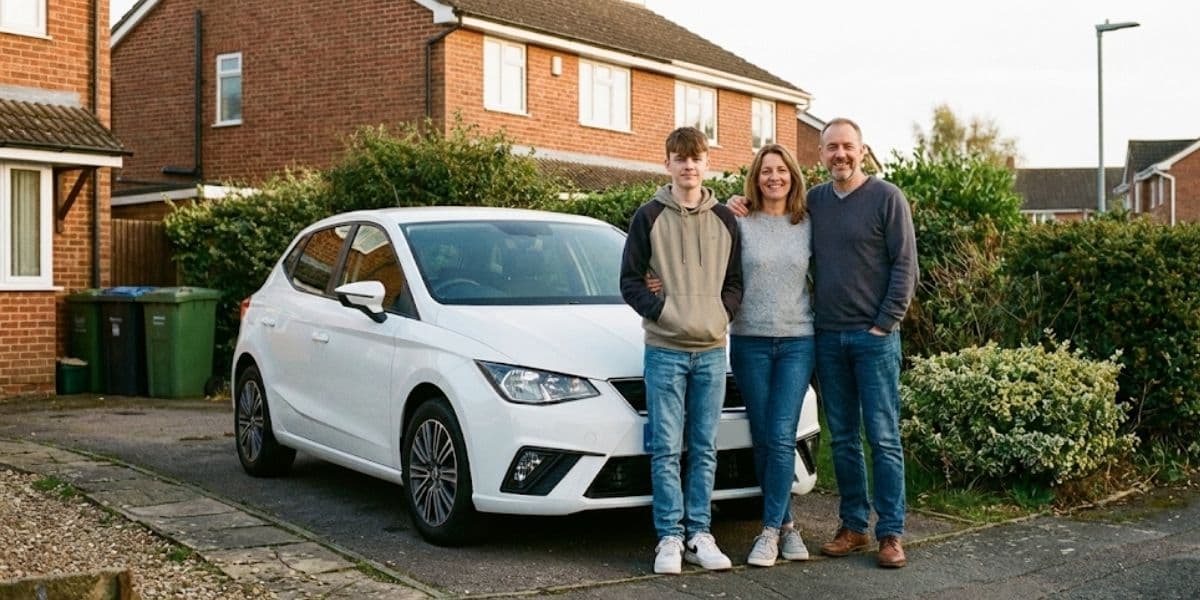
The best first car for a 17 year old in 2026 depends on budget. There are good options at each price point.
If we had to pick one overall winner, it would be the Toyota Aygo (2014–2022). It offers low insurance (Group 2), avoids Low Emission Zone charges and returns 55mpg+. Small Volkswagens and their cousins from other Skoda and SEAT are also good options. Service history, engine type and individual specs are more important than the brand name.
Buying your teenager's first car is complicated. Similar looking cars can cost twice as much to insure or be way more expensive to run. This guide ranks the best options based on Total Cost of Ownership for young drivers and calls out specific models to look out for.
How to use this guide
We've categorised cars by purchase budget. If you like a car in a higher budget but can't afford it, you might sill find an example with a higher mileage. If you do, insist on a full service history.
Jump to:Under £3k |£3k-£5k |£5k-£8k |£8k-£12k
2026 used car market
The UK used car market in 2026 is recovering from a post-Covid hangover. Between 2020 and 2023 manufacturers didn't build 2.5 million cars. Those missing cars would now be 3-6 years old and some would be the type of thing young drivers would be looking for. The gap is pushing prices up and limiting choice.
Why total cost of ownership matters
The purchase price is only the starting point. While young driver insurance costs have fallen over the last couple of years, they’re still high. Easily £2000 for a 17 year old. On top of that comes road tax, maintenance, servicing and fuel.
This is why total cost of ownership matters more than the car cost. A £3,000 car in insurance group 10 can cost more to run over two years than a £6,000 car in group 1. The headline price tells you very little about what the car will really cost you.
It’s also important to include model specific risks. Some cars are likely to have expensive failures e.g. “wet belt” engines or some automatic gearboxes. A single repair can run into the thousands.
Total cost of ownership is about planning to avoid nasty surprises and picking a car that’s affordable to run, not just affordable to buy.
— Erin Baker, editorial director at Autotrader
Average Insurance Cost by Age (2026 vs 2024)
| Age Group | Average Premium (2026) | Trend vs. 2024 |
|---|---|---|
| 17 | £1,932 | -25% (£635 saving) |
| 18 | £1,750 | -15% |
| 19 | £1,500 | -18% |
| 20 | £1,025 | -20% |
| 21–24 | £860 | -12% |
Understanding Road Tax in 2026
Road tax (aka Vehicle Excise Duty) changed a lot in April 2017. For cars registered after this date, most small cars pay a flat "Standard Rate" of £195 per year. For cars registered before April 2017, the tax is based on CO2 emissions. This means "cleaner" older cars e.g. a 2016 Toyota Aygo pay £0 road tax, whereas a 2018 model with the same engine will be £195 each year.
The "hidden" costs: maintenance and MOT
In 2026, the average cost of an interim service for a small car like a Hyundai i10 is about £170. Essential "consumable" costs include:
- MOT Test: £55
- Full Set of Tyres: £300 (decent brand on a small wheel)
- Replacement Brake Pads: £150 per axle
How we rank first cars
These rankings are based on data rather than subjective things like style or comfort (view a car at your local dealer for this). Four factors only.
| Ranking Pillar | Weighting | Key Metric |
|---|---|---|
| Insurance Risk | 40% | Insurance group 1–5 |
| Reliability | 25% | 100k-mile fault rate |
| Safety Tech | 20% | AEB features present |
| Low emmision zone compliance | 15% | Euro 6 / Hybrid |
Know your budget. Not sure what's next?
The First Car Guide walks you through the entire process, from setting a budget to collecting the keys in 5 digestible steps. Free download.
Budget: Under £3,000
The sub £3,000 bracket is the entry point for most young drivers. At this budget, you're looking at cars that are 10-15 years old with decent mileage. But you can still find safe and reliable options if you know what to look for.
Toyota Aygo / Peugeot 107 / Citroen C1 (2005–2014)
The "City Bug" triplets, developed as a joint venture between Toyota and the PSA Group (now called Stellantis) are the ideal budget first car. The Toyota Aygo, Citroen C1, and Peugeot 107 share the same Toyota 1.0-litre three-cylinder engine (thankfully they went with this over a PSA unit). It's chain driven rather than belt driven so it'll save money on maintenance.
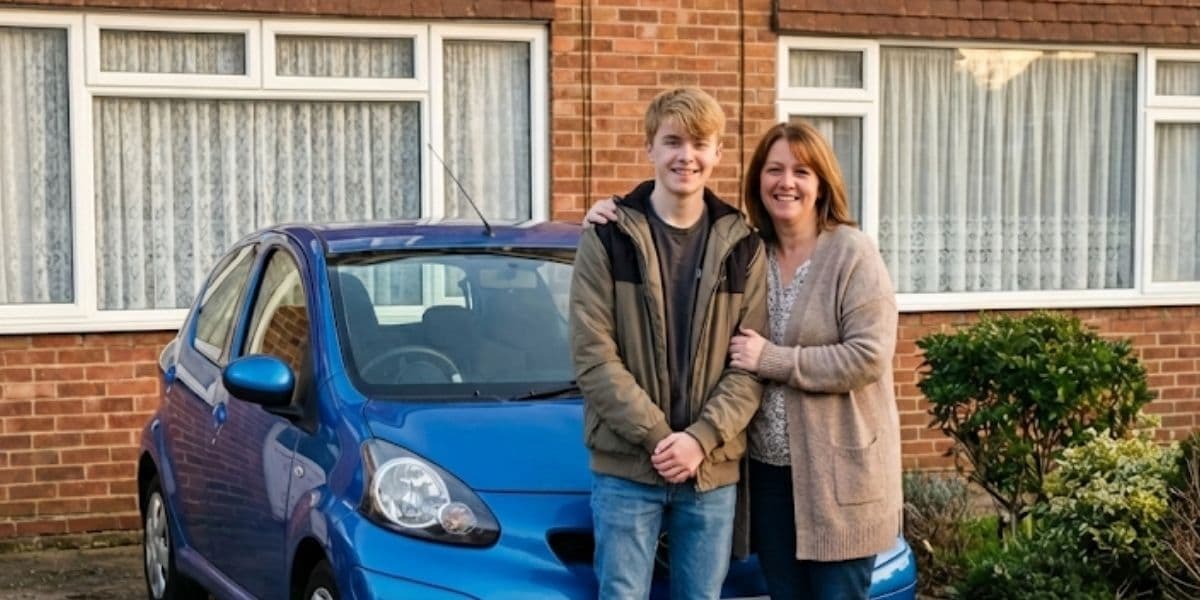
"The Aygo remains the gold standard for first cars. Parts are everywhere, they sip fuel and insurers love them. Just check the clutch and door seals for leaks."
Watch out for water leaks. The rear light clusters, high-level brake light and door seals let moisture into the boot and footwell. Left unchecked, this causes interior fogging and electrical corrosion. The clutches are small and often need replacing every 60,000 miles, especially if the car's only been used for city driving. Budget £300-£500 for a clutch replacement if it has over 60k miles.
Ford Fiesta 1.25 Zetec (2008–2012)
This model is peak Fiesta. It has a similar (and excellent) driving experience of newer Fiestas but without the notoriously troublesome turbocharged 1.0 EcoBoost engines. The older 1.25-litre Zetec unit is non-turbo, bulletproof and avoids the catastrophic wet belt failures of the newer 1.0-litre engines that have been known to consign a car to the scrapheap prematurely. The 1.25 Zetec is one of the most trouble free engines Ford has produced, so long as it's had regular oil changes.
This generation of Fiesta (mark 7)'s best feature is the chassis. Even in base spec, it has steering precision and handling balance that makes driving fun and engaging. Andrew English, motoring correspondent at The Telegraph, praised this Fiesta generation: "At a time when many customers are downsizing, Ford was well placed with Fiesta... which are hi-tech, appealing, and highly fuel-efficient vehicles. It marks a significant landmark in Ford's history."
"At a time when many customers are downsizing... Fiesta marks a significant landmark in Ford's history."
Check the suspension carefully. Worn anti-roll bar drop links and rear beam bushes cause knocking noises over bumps, but they're cheap and easy to replace. The timing belt should be changed every 10 years or 100,000 miles.
Mazda 2 (2007–2014)
This generation of Mazda 2 shares its platform with the Ford Fiesta but often costs less to buy. The 1.3-litre petrol engine is chain driven and therefore low maintenance.
It scores high in reliability surveys and achieves strong MOT pass rates.
"If you're prepared to use the revs and make the most of the fantastically snappy manual gearbox then this can add to the fun of driving the little Mazda."
Watch out for rust on the rear wheel arches and sills. Stone chips left untreated turn into holes quickly.
| Make & Model | Ins. Group | Road Tax | Safety (NCAP) | Watch out for |
|---|---|---|---|---|
| Toyota Aygo 1.0 | 2–3 | £20 | 4 stars (2005) | Water leaks in boot |
| Ford Fiesta 1.25 | 6–8 | £195 | 5 stars (2010) | Rear suspension bushes |
| Mazda 2 1.3 | 9 | £35 | 5 stars (2010) | Rust on sills and wheel arches |
Budget: £3,000 – £5,000
This segment is the "sweet spot" of the 2026 used market. Buyers can step away from the aging, higher mileage cars of the previous category and into something that was made with higher safety standards and more modern driver assistance technology. Some of these cars are Euro 6 compliant, so can be driven in UK Clean Air Zones without penalty.
VW Up / Skoda Citigo / SEAT Mii (2012–2019)
Known as the "Up triplets," these cars redefined the city car segment. They feel solid on faster roads because they were engineered to feel like a much larger car.
The 1.0-litre three-cylinder engine is available in 60hp and 75hp outputs. Both versions are naturally aspirated and generally reliable, though it uses a timing belt rather than a chain.
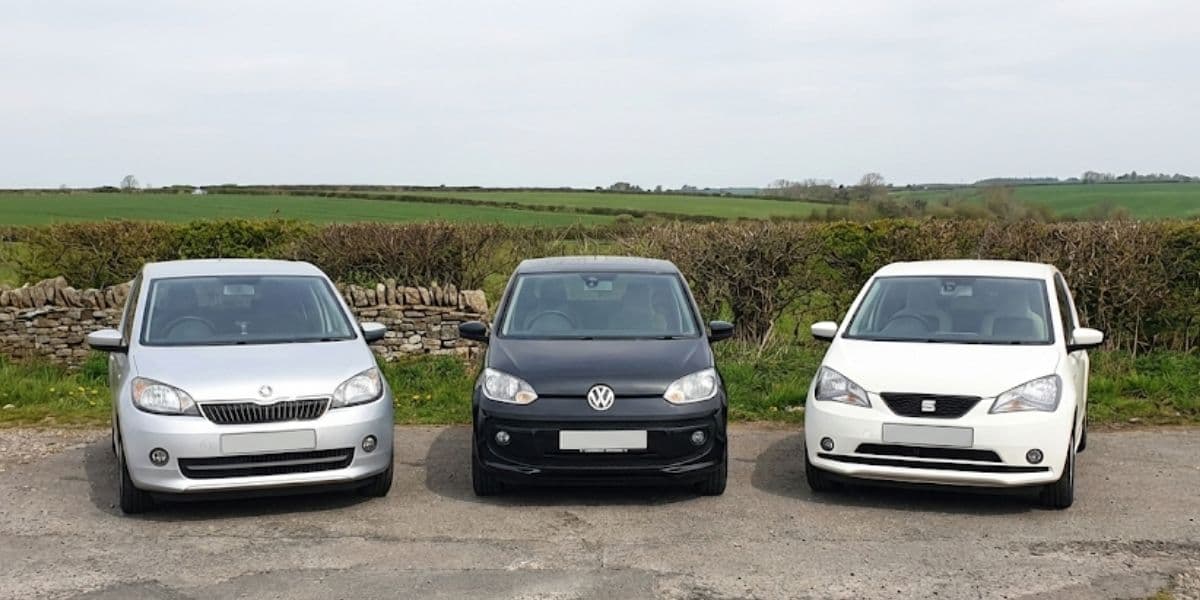
Volkswagen initially claimed the belt was a "lifetime" component, but UK specialists recommend replacement every 5 years or 60,000 miles to prolong engine life.
Hyundai i10 (2014–2019)
The second generation i10 shows Hyundai's shift toward European quality. The interior feels like it's from a larger more expensive hatchback. The midrange SE model has loads of standard equipment including air conditioning, cruise control and Bluetooth.
"The Hyundai i10's result in Driver Power proves it's a hot favourite with owners... proving to be reliable and well built, too."
The 1.2 engine is the preferred choice for regular long journeys, as it feels less strained than the 1.0. Beware of cars with sticky rear brake pads that have been sitting unused for long periods.
Vauxhall Corsa (2014–2019)
This generation of Corsa known as the "E" is still one of the most popular first cars in the UK. Parts are readily available and repair costs are relatively low. The Corsa has a modern feeling interior with many models having the "IntelliLink" touchscreen system, which provides easy smartphone integration for navigation and music.
Aim for the 1.4 non-turbo engine becuase it's a simple, reliable unit that avoids the complexities and potential wet belt issues of newer turbocharged engines.
Fiesta or Corsa?
Can't decide between these two popular first cars? Check out our detailed Ford Fiesta vs Vauxhall Corsa guide for a deep dive into insurance costs, reliability, and running costs.
| Make & Model | Ins. Group | Road Tax | Safety (NCAP) | Watch out for |
|---|---|---|---|---|
| VW Up! 1.0 | 1–3 | £20 | 5 stars (2011) | Input shaft bearing |
| Hyundai i10 1.2 | 5–6 | £35 | 4 Stars (2014) | Rear brake pads stick |
| Vauxhall Corsa 1.4 | 6–9 | £20 | 4 Stars (2014) | Turbo wet belt engines |
Budget: £5,000 – £8,000
This is the entry point for "modern" motoring. Expect to find cars less than eight years old with mileages under 50,000. Often they'll have modern active safety systems that help avoid collisions and insurance companies like. There are also some hybrid options at this price point for increased fuel economy.
SEAT Ibiza / Volkswagen Polo / Skoda Fabia 1.0 TSI (2017–Present)
The fifth generation SEAT Ibiza was a leap forward for the supermini segment. It was the first car from the Volkswagen group to be built on the MQB-A0 platform, which later underpinned the VW Polo, Skoda Fabia and Audi A1. These cars have a "big car" feel thanks to the wider track than the older versions.
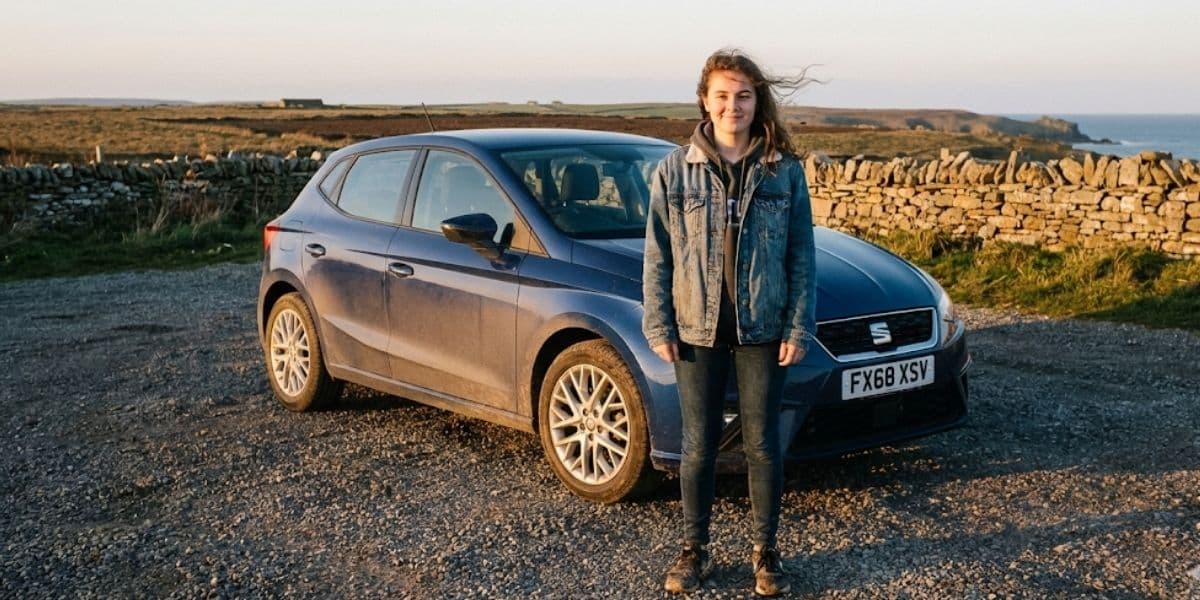
"The latest Seat Ibiza remains Euro NCAP's top supermini pick for safety... far greater levels of protection."
Avoid the DSG automatic transmission. Early units experience jerky shifts or shuddering in stop-start traffic, pointing to a failing mechatronic unit. Repairs cost £1,200-£2,000.
Mazda 2 (2015–Present)
Many manufacturers have moved to small turbocharged engines for efficiency and power. Not Mazda. They stuck with bigger, simpler engines without a turbo. The result is better reliabiliy because there's less to go wrong. The 1.5 litre petrol engine in the Mazda 2 is efficient and consistently scores near the top of reliability surveys with an average of over 94%.
The rear legroom and boot space are tighter than the Ibiza / Polo / Fabia and paint quality can be thin so look for stone chips on the bonnet and wings that will need sorted to prevent rust.
Toyota Yaris Hybrid (2012–2020)
The Yaris Hybrid is a sensible first car for a £7,000 budget. It uses Toyota's long proven self charging hybrid system: a 1.5-litre petrol engine with an electric motor. In town traffic it's in EV mode a lot, getting over 65mpg.
There isn't a manual option but the e-CVT automatic is simple and robust compared to most other automatic transmission systems.
Watch out for cars that have sat around unused for several days, it can drain the 12V batter and prevent the hybrid system from starting. Sorted by regular use or replacing the 12V batter with a larger one.
Kia Picanto 1.0 (2017–Present)
Newish Kia Picantos offer peace of mind motoring thanks to the amazing seven-year/100,000-mile warranty.
The 1.0 litre engine might feel underpowered but that means lower insurance premiums.
| Make & Model | Ins. Group | Road Tax | Safety (NCAP) | Watch out for |
|---|---|---|---|---|
| SEAT Ibiza 1.0 TSI | 11–13 | £195 | 5 Stars (2017) | Check DSG gearbox history |
| Mazda 2 1.5 | 13–15 | £195 | 5 Stars (2015) | Check for rust spots |
| Toyota Yaris 1.5 Hybrid | 8–10 | £195 | 5 Stars (2017) | 12V battery drain |
| Kia Picanto 1.0 | 3–5 | £195 | 4 Stars (2018) | Check warranty validity |
Budget: £8,000 – £12,000
In 2026, the £8,000 to £12,000 segment represents a low risk entry point into motoring. This budget is for young drivers and their parents who prioritise a car that will be hassle free for the first three to five years of ownership. You'll get a car that's 2 to 4 years old so may have some manufacturer's warrantly left.
Dacia Sandero (2021–Present)
A Dacia is like a no frills Renault. This third generation Sandero moved the brand into the mainstream. Built on the same CMF-B platform as the Renault Clio, the Sandero now has refinement and safety previously only found on more expensive cars. For a budget of £10,000, you can find a low mileage two year old Sandero in "Comfort" or "Essential" trim.
The Sandero is bigger than an i10 or Aygo, offering a full size supermini experience for city car money. An interesting variant of the Sandero is the "TCe 100 Bi-Fuel" engine, which can run on petrol and LPG (Liquefied Petroleum Gas). Amazingly this can reduce fuel bills by up to 40% (so long as you're near a petrol station offering LPG).
The main drawback is the interior materials. The plastics are utilitarian and lack the premium feel in a Ford or Volkswagen.
Toyota Aygo X (2022–Present)
The Aygo X (pronounced "Aygo Cross") replaced the original Aygo and is a shift in how small cars are designed. It has raised ride height and crossover styling, which some drivers like due to the better visibility and tough looks.
The Aygo X was engineered around the latest Euro NCAP safety standards. It comes as standard with "Toyota Safety Sense," a set of driver assistance features including pedestrian and cyclist detection, lane trace assist and adaptive cruise control. This can have a knock on effect of lowering insurance quotes relative to similar cars without the safety tech.
Toyota offers a "Relax" warranty that extends by 1 year or 10,000 miles every time the car is serviced at a main dealer, up to a maximum of 10 years.
Hyundai i10 (2021–2023)
This newer i10 is even more refined and well equipped than the previous version.
Hyundai's 5 year unlimited mileage warranty was a major selling point when these cars were new, meaning these cars will have probably been serviced exclusively within the main dealer network to maintain that protection.
The 1.2 4 cylinder is still preferred over the 1.0 3 cylinder.
| Make & Model | Ins. Group | Road Tax | Safety (NCAP) | Watch out for |
|---|---|---|---|---|
| Dacia Sandero | 9–11 | £195 | 4 stars | Check LPG system (if Bi-Fuel) |
| Toyota Aygo X | 5–7 | £195 | 4 stars | Check Toyota Relax warranty |
| Hyundai i10 1.2 | 3–6 | £195 | 4 stars (2022) | Check service history |
Cars that didn't make the cut
Mini Cooper (R56, 2007-2013)
"Death Rattle" timing chain failures on N14 engines. High insurance and maintenance costs.
Fiat 500 (Dualogic)
Semi automatic gearbox is a known failure point. £2k repair bills.
Peugeot 208 (Early PureTech)
"Wet belt" degradations can destroy the engine if not maintained perfectly.
Old Premium Saloons
BMW 3 Series/Audi A4. Nice to drive and look at but insurance disasters for young drivers in their early years.
Regional Considerations
Where you live changes what car you should buy.
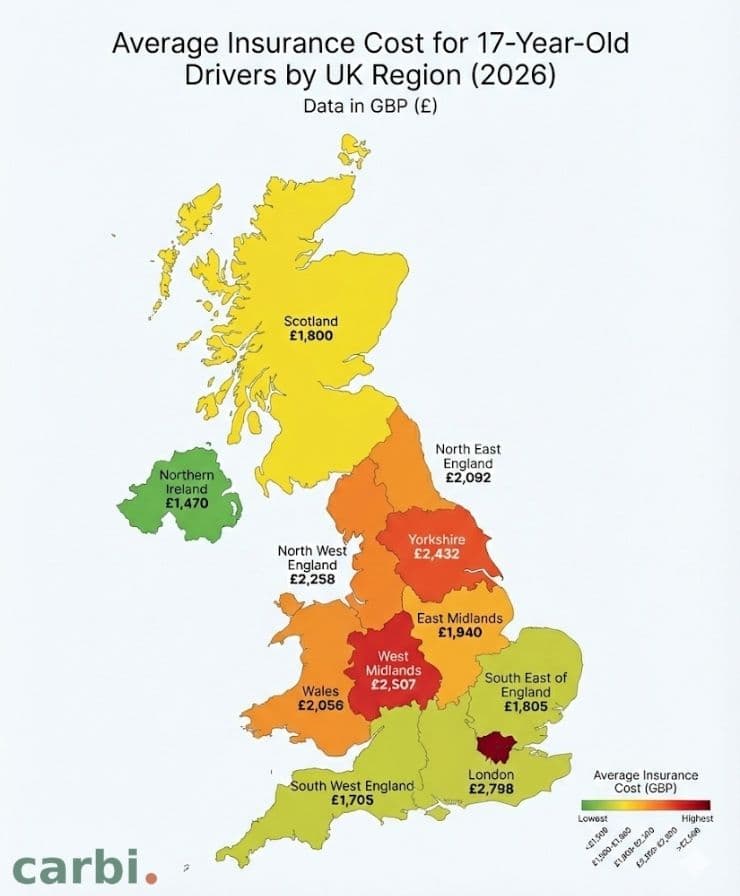
| Region | Avg. 17yo Premium | Consideration |
|---|---|---|
| Northern Ireland | £1,470 | Reforms planned this year for 24 month R-plates and nighttime passenger restrictions for under-24s. |
| South West | £1,705 | Lowest National Premiums |
| Scotland | £1,800 | Aberdeen is the UK’s cheapest city for insurance, but rural young drivers face higher costs due to higher annual mileage. |
| East of England | £1,805 | Higher rural mileage offsets lower urban crime rates. |
| East Midlands | £1,940 | Near the national average for teenage risk. |
| Wales | £2,056 | Impacted by 20mph limits and rural road severity. |
| North West England | £2,092 | Specific postcode vulnerabilities in NE and SR areas. |
| Yorkshire | £2,432 | High claims frequency in Leeds and Sheffield hubs. |
| West Midlands | £2,507 | Elevated collision rates in urban Birmingham/Coventry. |
| London | £2,798 | Highest density of theft and ULEZ-related costs. |
Next steps: From shortlist to purchase
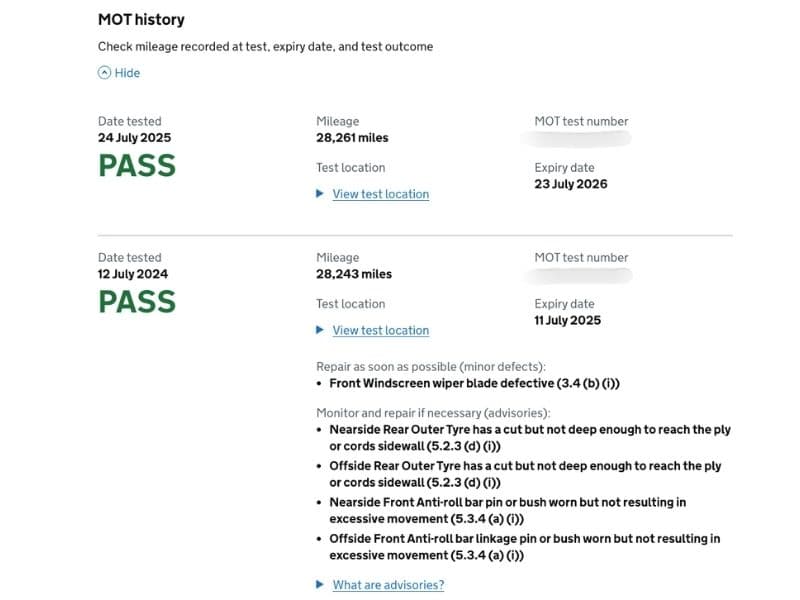
- MOT history check: Use the free GOV.UK service. Look for recurring advisories (e.g. tyres, brakes) suggesting poor maintenance.
- Cold start inspection: Always view a car when the engine is cold to hear timing chain rattles or tappet noise.
- Verify "wet belt": For 1.0 Ford EcoBoost or Peugeot 1.2 PureTech, demand proof of belt change if over 60k miles/6 years.
- Test Electronics: Windows, A/C and infotainment. These are expensive fixes on modern cars.
- Consider Telematics: If quotes are >£2,000, "black box" policies (often app-based now) are the only way to save.
Overwhelmed?
If this guide got you thinking but you're not sure where to start, the First Car Guide breaks it down into 5 simple, logical steps.