Fiat 500 (2007-2026) Review for Young Drivers: Insurance, Running Costs and What to Watch
The wrap
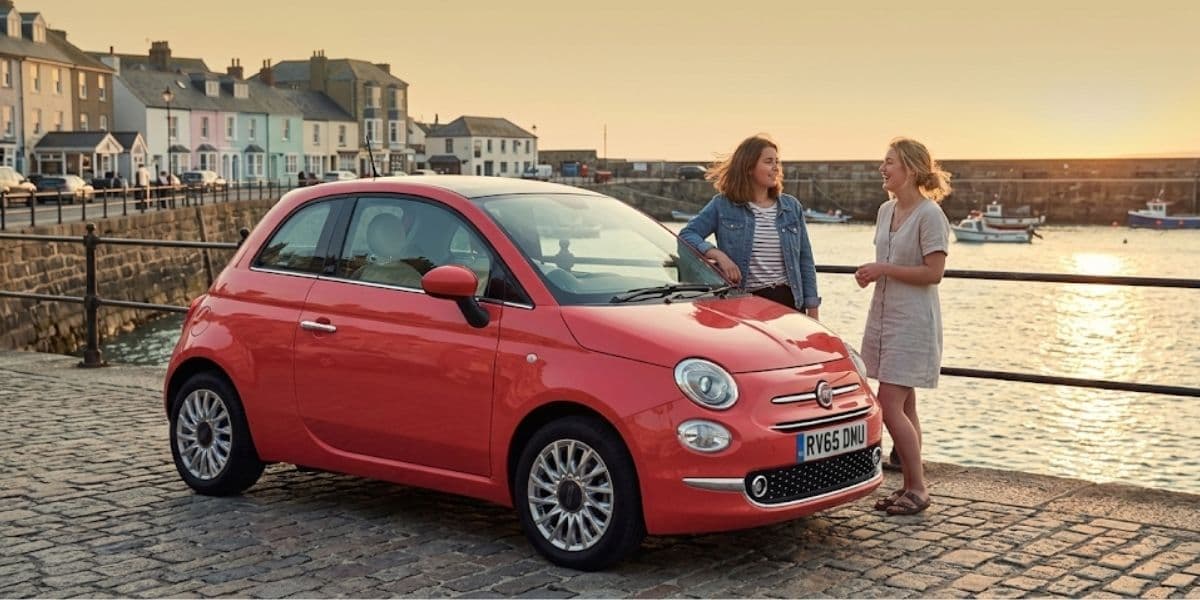
The Fiat 500 is the most stylish first car on the market. Nothing else at this price turns heads the same way and it's why teenage girls love them. Insurance groups start at Group 7 for the 1.2 FIRE engine and the used market covers budgets from £1,100 to £18,000+. But parents need to know the trade-offs: a 3 star Euro NCAP rating on pre-2020 models, a tiny boot and only four seats. The 2026 Hybrid and 500e fix the safety gap with Level 2 driver assists but cost more. If your teenager wants style above all else and mostly drives in town, the Fiat 500 is a decent choice. If practicality matters more, the Renault Clio or Ford Fiesta are stronger all rounders.
Quick facts
| Metric | Value |
|---|---|
| Insurance Groups | 7-16 (7-12 for young driver engines) |
| Used Price Range | £1,100-£18,000 |
| Euro NCAP | 3 stars (2017 retest), 4 stars (500e, 2021 test) |
| Best Engine | 1.2 FIRE 69bhp |
| Annual Running Cost | £4,000 (17 yo), £2,900 (21 yo) |
Who is this car for?
Perfect for:
- Young drivers who care about style and want a car with personality
- City and town drivers doing short drives
- Parents with a budget of £3,500-£7,000 who want something fun
- Teens near ULEZ zones (all petrol Fiat 500s from 2007 meet Euro 4 or better)
Not ideal for:
- Drivers who need rear seat space or a big boot (185 litres is tiny compared to the Clio's 391 litres)
- Young drivers doing regular motorway miles (the Fiat 500 is not comfortable on long motorway drives)
- Parents who prioritise Euro NCAP safety ratings (3 stars on pre-2020 models vs 5 stars on the Renault Clio Mk5)
- Anyone who needs more than four seats
The Fiat 500 is shorter, narrower and less practical than a Corsa or Fiesta. The trade-off is character.
"The Fiat 500 is likely to be the cheapest car to insure for 17 year old drivers... even two decades on since its launch it's a hugely popular car that shows no signs of disappearing."
The used market is massive. Two decades of production means there's a Fiat 500 for every budget. Early models (2008-2012) start from £1,100 (though will be ropey at this price point). Facelifted cars with Uconnect touchscreens (2016-2019) sit in the £3,500-£6,500 range. The 500e electric and 2026 Hybrid push well above £10,000.
The engines: which one to buy
As with a lot of small cars, the engine choice is critical. Some are reliable and others are flakey.
1.2 FIRE (2007-2020): the best one
The 1.2 litre 8-valve FIRE (Fully Integrated Robotized Engine) is the most common Fiat 500 on the used market and the best choice for a first car.
Why it works for young drivers:
- 69bhp. Enough for town driving. Adequate (not quick) for motorway slip roads.
- Insurance Group 7-12 depending on trim. Group 7 on the Pop is competitive.
- Real world fuel economy: 47-50mpg. Cheap to fill.
- 0-62mph in 12.9 seconds. Not fast, but also not terrible.
- Timing belt and water pump every 60,000 miles or 5 years. If it has been done on schedule, the 1.2 FIRE will probably keep going trouble free.
The simplicity is the selling point. No turbo or complicated electronics. Any independent garage can service it for £150-£250 a year.
0.9 TwinAir (2011-2019): sounds fruity but fragile
The TwinAir is a turbocharged two cylinder engine with a distinctive exhaust note. It sounds like nothing else on the road. 85bhp or 105bhp depending on tune.
The appeal: More power than the 1.2 FIRE. Sub-100g/km CO2 on paper, which meant zero road tax before the 2017 road tax changes.
The risk: The TwinAir module (an electro-hydraulic valve system) is sensitive to oil quality. Miss an oil change or use the wrong grade and the module can fail. Repair bills can be over £1,000. Fiat claimed 68.9mpg. Real world driving gets 35-40mpg because the small engine works hard to keep up with traffic.
Insurance Group 10-12. Not much higher than the 1.2 FIRE. But the maintenance risk makes the 1.2 the safer bet for a first car.
1.0 mild hybrid (2020-present): the modern option
From 2020, Fiat replaced the 1.2 FIRE with a 1.0 litre three cylinder FireFly engine paired with a 12 volt belt-integrated starter generator. This is a "mild" hybrid: it assists the engine during acceleration and improves stop-start but doesn't drive on electricity alone.
For young drivers:
- 70bhp (65bhp on the 2026 version).
- Insurance Group 11-13.
- Real world fuel economy around 53mpg in town.
The catch: Slow acceleration. 0-62mph in 13.8-16.2 seconds depending on version. The 2026 Hybrid at 65bhp is one of the slowest cars on sale. Motorway slip roads feel slow. Plan your merges.
500e: the electric option
The all electric 500e launched in 2021 on a dedicated platform. Two battery options: 24kWh (118 mile range) and 42kWh (199 mile range).
The upside:
- 0-60mph in 9.0-9.5 seconds. Genuinely quick off the line. Silent in town.
- Cheap to run if you can charge at home.
The downside for young drivers:
- Insurance Group 14-16.
- Higher upfront cost (£10,000-£18,000 used).
- Charging infrastructure is a problem if you don't have a driveway.
Engine comparison
| Engine | Power | Insurance Group | Real-World MPG | 0-62mph |
|---|---|---|---|---|
| 1.2 FIRE | 69bhp | 7-12 | 47-50mpg | 12.9s |
| 0.9 TwinAir | 85bhp | 10-12 | 35-40mpg | 10.8s |
| 1.0 Hybrid | 65-70bhp | 11-13 | 48-53mpg | 13.8-16.2s |
| 500e (42kWh) | 118bhp | 14-16 | N/A (electric) | 9.0s |
Driving and performance
The Fiat 500 is built for the city, it's great here and mediocre everywhere else.
City driving
This is where the Fiat 500 earns its reputation.
"A commuter car to chuck around tight city bends... the light steering and excellent all round visibility make it a breeze."
Mat's right. The turning circle is one of the tightest in any car on sale. Parking is easy. The high seating position gives new drivers confidence because you can see the corners of the car. Driving instructors use the Fiat 500 for exactly this reason.
The "City Mode" button makes the steering lighter still. Useful for parallel parking. One touch and the wheel spins freely.
Motorway driving
This is where the Fiat 500 struggles. At just 3,571mm long (about 350mm shorter than a Fiesta), the Fiat 500 sits high and feels exposed at speed. At 70mph, wind noise is noticeable and the 1.2 FIRE engine sits at high revs.
If your teenager regularly drives on motorways, a Polo, Fiesta or Corsa is a better choice.
The 500e is the exception. Electric torque makes motorway merging easier and the cabin is quieter. But range anxiety adds its own stress on longer trips.
For new drivers
The Fiat 500's predictable handling and light controls make it great for someone building confidence. The suspension is stiff, which means it feels "bouncy" over potholes (UK roads are not kind to it). Electronic Stability Control is standard across all years. The brakes work well.
City Driving
Effortless parking and tight turning circle.
Motorway Driving
Noisy and bouncy at speed.
Technology and interior
Phase 1: Blue&Me (2007-2015)
Developed with Microsoft. Voice controlled Bluetooth and a USB port. No touchscreen or smartphone mirroring.
It felt modern in 2008 but shows its age now.
The main niggle: the "flashing odometer" glitch. A communication failure between the Blue&Me module and the car's electronics. Usually costs £100-£300 to diagnose and fix.
Buying tip:
If you buy a 2007-2015 Fiat 500, budget for an aftermarket CarPlay head unit (£150-£300 fitted) to bring the infotainment tech up to date.
Phase 2: Uconnect (2016-2020)
The 2016 facelift introduced 5 inch and 7 inch touchscreens. A big improvement. But early Uconnect systems (2016-2019) do not support Apple CarPlay or Android Auto. Smartphone mirroring became standard from 2020 on most trims.
Phase 3: 10.25 inch screen (2021-2026)
The 500e and 2026 Hybrid get a 10.25 inch touchscreen with wireless smartphone connectivity and connected services including ChatGPT integration.
"The 500e stays loyal to its 1950s roots. Woven material across the dash made from recycled plastic is a nice touch, and there are fun Easter eggs around the car like Turin's skyline."
Interior and practicality
The Fiat 500 is strictly a four seater and the back seats only work for small kids or short trips. Tall passengers will find their legs jammed against the front seats and headroom severely limited.
"Rear passengers sit with their legs akimbo."
Boot space: 185 litres, that's three or four shopping bags. Much smaller than the Hyundai i10 (252 litres), Volkswagen Up (251 litres) or Renault Clio (391 litres). If your teenager needs to carry sports kit, musical instruments or regular loads, the Fiat 500 boot is a real limitation.
Safety
Safety is where parents need to pay close attention. The Fiat 500's story is more complex than its rivals.
The 2007-2020 petrol models: 3 star Euro NCAP
When the modern Fiat 500 launched in 2007, it scored 5 stars in Euro NCAP testing. The first in its class. But safety standards evolved faster than the Fiat 500's platform. When retested in 2017, the rating dropped to 3 stars.
2017 Euro NCAP results:
- Adult occupant: 66%
- Child occupant: 49%
- Vulnerable road users: 53%
- Safety assist: 27%
The drop was mainly because of missing modern safety tech - things like Autonomous Emergency Braking and Lane Keep Assist. A "submarining" risk was flagged in the rear seats during frontal collision testing, where passengers could slip under the lap belt.
For context: the Renault Clio Mk5 scored 96% adult occupant protection. The Vauxhall Corsa F scored 84%. The Fiat 500's 66% is a big gap.
The 500e and 2026 Hybrid: 4 star Euro NCAP
The 500e was tested in 2021 on the new platform:
- Adult occupant: 76%
- Child occupant: 80%
- Vulnerable road users: 67%
- Safety assist: 67%
A major improvement. The 500e and 2026 Hybrid share this platform and come with 7 airbags, Level 2 semi-autonomous driving features including AEB, Lane Keep Assist and Traffic Sign Recognition.
Safety summary
The pre-2020 Fiat 500 is weaker than its rivals. A 2019 Clio Mk5 or 2020 Corsa F in the same price range offers better crash protection and active safety tech. The Fiat 500's structural safety is adequate but not class-leading.
If your teen has their heart set on a Fiat 500 and you want the safest 500 possible, aim for a 500e or the 2026 Hybrid if the budget with stretch.
Parent peace of mind (Pre-2020)
Structural safety is adequate but missing active tech.
Parent peace of mind (500e/2026)
Modern safety assists and better crash ratings.
Running costs and ownership
Insurance
The Fiat 500's insurance groups are higher than budget rivals like the Corsa or Polo, but still affordable for a first car.
| Engine Variant | Insurance Group | Est. Premium (17yo) | Est. Premium (21yo) |
|---|---|---|---|
| 1.2 FIRE Pop | 7 | £2,150 | £1,150 |
| 1.2 FIRE Lounge | 10 | £2,300 | £1,250 |
| 0.9 TwinAir Lounge | 10-12 | £2,300-£2,450 | £1,250-£1,350 |
| 1.0 Hybrid Pop | 11 | £2,350 | £1,300 |
| 1.0 Hybrid Lounge | 13 | £2,500 | £1,400 |
| 500e (42kWh) | 14-16 | £2,550-£2,700 | £1,450-£1,550 |
Fuel
| Engine | Real-World MPG | Annual Cost (10,000 miles, £1.45/L) |
|---|---|---|
| 1.2 FIRE | 47-50mpg | £1,320-£1,400 |
| 0.9 TwinAir | 35-40mpg | £1,650-£1,880 |
| 1.0 Hybrid | 48-53mpg | £1,240-£1,370 |
| 500e | N/A | £500-£750 (home charging) |
Servicing
| Item | Dealer | Independent |
|---|---|---|
| Annual service (1.2 FIRE) | £200-£300 | £150-£250 |
| Timing belt + water pump | £350-£500 | £250-£400 |
| Clutch replacement | £450-£700 | £300-£500 |
| TwinAir module repair | £1,000+ | £700-£1,000 |
| Dualogic gearbox repair | £800-£1,500 | £600-£1,200 |
Annual running cost summary
Based on the 1.2 FIRE Fiat 500 Lounge:
| Age | Insurance | Fuel | Tax | Service | Total |
|---|---|---|---|---|---|
| 17 year old | £2,300 | £1,360 | £20-£195 | £175 | £3,855-£4,030 |
| 19 year old | £1,600 | £1,360 | £20-£195 | £175 | £3,155-£3,330 |
| 21 year old | £1,250 | £1,360 | £20-£195 | £175 | £2,805-£2,980 |
What to watch: known issues
All models: hatchback wiring harness
The single most common Fiat 500 problem across every model year from 2007 to 2020. The wiring loom that runs from the body into the tailgate chafes and snaps over time. Symptoms: rear wiper stops working, boot release fails or number plate lights flicker. Honest John flags this as a "known fault." Dealer repair can exceed £700. Independent garages offer specialised loom repair kits for £150-£300.
All models: suspension and steering
Axle and suspension issues account for almost half of all reported faults. Common problems: worn front suspension arms and premature rear wheel bearing failure, often by 35,000 miles. Budget £200-£400 for suspension work on higher mileage cars.
All models: door handles
The chrome-effect door handles on the Fiat 500 are fragile. The hinges snap. Replacement handles are cheap (£20-£40) but the labour can add up at a dealer.
The best variant to buy
Safe bet: 2016-2019 Fiat 500 1.2 FIRE Lounge
This is our top recommendation for most families. The 1.2 FIRE is proven, simple and cheap to maintain. Lounge trim gets a glass panoramic roof, alloy wheels, the Uconnect touchscreen and climate control.
Budget: £3,500-£6,500 (30,000-70,000 miles)
Budget conscious: 2012-2015 Fiat 500 1.2 FIRE Pop
The cheapest usable Fiat 500. Basic spec but fewer things to go wrong. Insurance Group 7 is very competitive. Only buy with full service history and timing belt evidence.
Budget: £1,100-£3,500 (50,000-80,000 miles)
If they want automatic: 500e (2021-2025)
The 500e electric motor gives seamless, silent acceleration. No Dualogic gearbox headaches. 4 star Euro NCAP with modern assists. Higher upfront cost but lower running costs. See our automatic first cars guide for more options, and our electric cars for young drivers guide for a full EV breakdown.
Budget: £10,000-£18,000
The verdict
The Fiat 500 is the heart vs head choice. No other first car matches it for personality. But parents buying with their head will find better safety ratings, more space and lower insurance elsewhere. If your teenager specifically wants style above all else and mostly drives in town, the Fiat 500 is a good option. For regular motorway use or heavy loads, a Polo, Corsa or Fiesta is the smarter pick. See our best first cars guide for a full comparison.