Hyundai i20 (2015–2026) Review for Young Drivers: Insurance, Running Costs and the Best Generation to Buy
The wrap
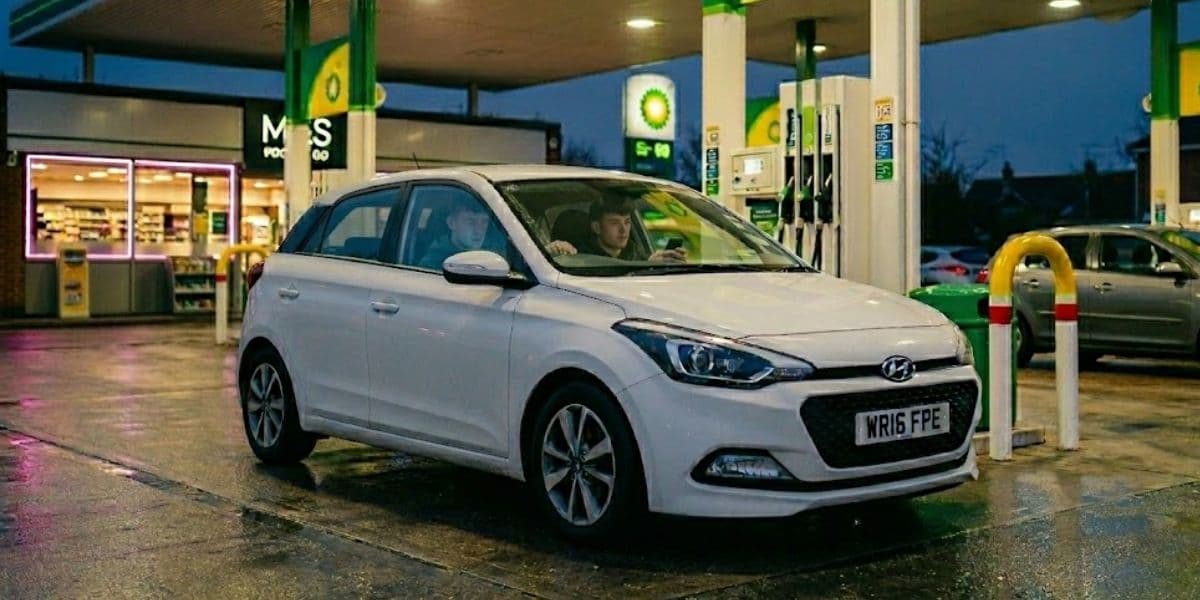
The Hyundai i20 is one of the best supermini (ie Fiesta sized) choices on the UK used market in 2026. The Ford Fiesta and the Vauxhall Corsa have years of insurance data with lots of young driver crashes (pre-black box era, mainly), the i20 hasn't been around as long and doesn't have that same joy-rider reputation. The i20 fills a gap. The second generation 1.2 MPi sits in Insurance Group 4, returns 47.2 mpg in real-world driving and uses a maintenance-free timing chain. The third generation brings Autonomous Emergency Braking as standard, a massive 352 litre boot and dual 10.25 inch screens on higher trims.
There are a few issues with some models though. The 48V mild hybrid system on Mk3 cars adds an expensive failure point if it goes wrong outside the 5 year warranty. The 1.0 T-GDi turbo can stretch its timing chain between 40,000 and 60,000 miles when oil changes are skipped. The base 1.2 MPi feels underpowered on the motorway with a full car of passengers.
Quick facts
| Metric | Value |
|---|---|
| Generations covered | Mk2 (2015–2020), Mk3 (2020–present) |
| Insurance Groups | 4–16 (excluding the i20 N) |
| Used Price Range | £3,000–£15,000+ |
| Euro NCAP | 4 stars (Mk2, 2015); 4 stars (Mk3, 2022) |
| Best Engine | 1.2 MPi 84 PS (Mk2), Insurance Group 5 |
| Annual Road Tax | £200 flat rate (post-April 2017); £190 for 48V MHEV; £20 pre-2017 |
| Real-world MPG | 47.2 mpg (1.2 MPi); 47.7 mpg (1.0 T-GDi MHEV) |
| Common Issues | Mk2 1.2 MPi clutch judder; Mk3 “Check 48V System” warning; T-GDi timing chain stretch |
| Manufacturer Warranty | 5 years, unlimited mileage |
| Boot Space | 326 litres (Mk2); 352 litres (Mk3) |
| Est. Annual Running Cost | £2,400–£3,800 for a 17 to 21 year old with a telematics policy |
Insurance groups sourced from ABI/Thatcham Research. Real-world MPG aggregated from Honest John owner submissions. Quote indications based on a 20 year old driver with three years of experience and an average UK postcode.
Who is this car for?
The i20 suits new drivers who want a roomy, modern supermini without paying premium prices for a Polo. It doesn't feel like a budget car.
Perfect for:
- First time drivers wanting low insurance groups on a decent sized car
- People who need to carry kit. The boot is awesome.
- Sub £5,000 budget looking for a newer and roomier car than a same-aged Mk2 Corsa or Fiesta
Not ideal for:
- Badge snobs.
- Someone looking for a new car in a low insurance group (post 2020 cars start at group 12).
For the trade-offs of older diesels in city zones, see the UK low emission zones for young drivers guide.
"The Hyundai i20 is a small, handsome and fun-to-drive hatchback, and it's one of the few petrol-powered, manual gearbox-equipped examples of the breed left on sale."
The two generations: Mk2 vs Mk3
The UK used market has two i20 generations worth a look as a first car. Pick by budget first, then narrow down by engine.
| Mk2 (2015–2020) | Mk3 (2020–present) | |
|---|---|---|
| Platform | GB | BC3 |
| Typical used price | £3,000–£8,000 | £9,000–£15,000+ |
| Best engine | 1.2 MPi 84 PS | 1.0 T-GDi MHEV 100 PS |
| Insurance Group range | 4–11 | 12–16 |
| Boot space | 326 litres | 352 litres |
| Euro NCAP | 4★ (2015) | 4★ (2022) |
| AEB as standard | No | Yes |
| Apple CarPlay | SE trim and above | Standard on SE Connect |
| Mild hybrid | No | 48V on T-GDi |
| Body styles | 5 door hatchback | 5 door hatchback |
The Mk2 is the value pick. The Mk3 is the modern pick with AEB, a bigger boot, a 10.25 inch touchscreen and the angular sporty styling. Neither car hit 5 stars in Euro NCAP, but both passed the modern test of their day.
Driving and performance
Mk2 (2015–2020)
The Mk2 feels half a class bigger than its rivals from the same era. Light steering, a tight turning circle and a comfort-biased suspension setup that prioritises smooth motorway cruising over outright sharpness.
- 1.2 MPi 75 / 84 PS: Naturally aspirated four cylinder, all aluminium block. The first car pick. Cheap to insure, mechanically simple, no turbo to worry about. Strained when overtaking lorries at motorway speeds with passengers on board
- 1.0 T-GDi 100 / 120 PS: Three cylinder turbo, much better acceleration. The right engine for mixed motorway and town driving. Insurance jumps to Group 10–11
- 1.4 MPi 100 PS: A reasonable compromise between the 1.2 and the 1.0 turbo. Group 8
- Avoid the 1.1 CRDi and 1.4 CRDi diesels. Unless you'll be doing long journeys. The DPF clogs on short urban trips. Pre-2015 examples attract low emission zone charges / fines.
Mk3 (2020–present)
The Mk3 is sharper looking, better to drive and a generation ahead on tech. Hyundai simplified the engine range for the UK market down to one petrol option paired almost exclusively with the 48V mild hybrid system. Insurance groups are way higher though.
- 1.0 T-GDi MHEV 100 PS: Group 12–13 in SE Connect manual. The mild hybrid system harvests energy under braking, stores it in a small lithium-ion battery and feeds it back through a starter-generator on acceleration. Real-world fuel economy lands around 47.7 mpg
- 1.0 T-GDi MHEV with 7-speed DCT: The dual clutch automatic adds Group 14. Useful in heavy urban traffic. DCT repairs out of warranty are eye-watering
- i20 N (1.6 T-GDi 204 PS): Group 27. Off the table for almost any new driver
The 16 inch alloys are preferrable to the 17s for UK potholled roads.
"It's a tidy car to drive, if not as amusing as a Ford Fiesta (not much is), with sharp (if largely feel-less) steering, good grip and precious little body roll."
For most new drivers, the lower insurance on the 1.2 MPi is the more sensible option. Perhaps the T-GDi if it's a shared car with a parent doing most of the driving.
Technology and interior
Mk2 (2015–2020)
The S trim is sparse: manual rear windows, basic radio, no smartphone connectivity. SE trim adds the 7 inch touchscreen with Apple CarPlay and Android Auto, air conditioning and rear parking sensors. Premium adds climate control and a reversing camera (not that you need that on a small car).
The 326 litre boot is wide and a good shape for fitting things in. The load lip sits high, so heavier items have to be lifted up and over the rear bumper. Rear headroom is good for the class.
Mk3 (2020–present)
The Mk3 lifts the tech a generation. SE Connect has a 10.25 inch touchscreen, Apple CarPlay, Android Auto, lane keep assist and AEB. Premium adds a second 10.25 inch digital instrument cluster, navigation and Bose audio.
Hyundai kept physical climate buttons rather than burying everything in the touchscreen. A small thing that makes a big usability and safety difference. A young driver can adjust the temperature without taking their eyes off the road.
The cabin plastics in lower trims are hard and scratchy.
"The 2023 Hyundai i20 offers excellent value for money with its spacious interior, modern design and strong selection of technology features."
Safety
Mk2 (2015–2020)
4 star Euro NCAP from 2015. Adult Occupant Protection 85%, Child Occupant Protection 78%, Pedestrian Protection 79%. The car missed 5 stars because Autonomous Emergency Braking was not standard at launch. Higher trims from 2017 onwards added Lane Keep Assist and Forward Collision Warning.
For new drivers, the standard Hill Start Assist Control is the most useful feature day to day. It holds brake pressure for two seconds when launching on an incline, which removes the rolling-back-into-the-car-behind problem on a manual.
Mk3 (2020–present)
4 star Euro NCAP from 2022, tested under much harsher modern protocols. Adult Occupant 76%, Child Occupant 82%, Vulnerable Road Users 76%, Safety Assist 67%. The Hyundai Smart Sense suite is standard across trims:
- Forward Collision-Avoidance Assist (FCA): Detects vehicles, pedestrians and cyclists. Auto-brakes if the driver doesn't react in time
- Lane Keep Assist (LKA): Steering nudge when the car drifts out of lane without an indicator
- Hill Start Assist Control: Same two second brake hold as Mk2
The Euro NCAP report flagged marginal driver chest protection in the frontal offset test. The cabin remained intact, but dummy data showed enough chest compression to lose marks.
For more on first car safety priorities, read why teen brain development affects young driver safety.
Running costs and ownership
Insurance
The biggest first year cost by a long way and one of the main differences between the base models of the Mk2 and Mk3. The Mk2 1.2 MPi in Group 4 to 7 is the strongest single argument for the i20 as a first car. For a 20 year old with three years of experience and an average UK postcode, indicative annual quotes by version look like this:
| Version | Insurance Group | Indicative annual quote |
|---|---|---|
| Mk2 1.2 MPi 75 / 84 PS S / S Air | 4 | £784 |
| Mk2 1.2 MPi 84 PS SE Blue Drive | 5 | £819 |
| Mk2 1.2 MPi 84 PS Go SE | 7 | £1,025 |
| Mk2 1.4 MPi 100 PS Premium | 8 | £837 |
| Mk2 1.0 T-GDi 100 PS SE | 10 | £913 |
| Mk2 1.0 T-GDi 120 PS Premium | 11 | £1,136 |
| Mk3 1.0 T-GDi MHEV SE Connect Manual | 13 | £922 |
| Mk3 1.0 T-GDi MHEV DCT N Line S | 14 | £1,047 |
| i20 N 1.6 T-GDi 204 PS | 27 | £1,598 |
For the full breakdown of how groups translate into real quotes, see the car insurance groups explained guide. If the policy is going on a parent's name, read named driver vs own policy before booking it in.
Fuel economy
As with most manufacturers, Hyundai's official figures are higher than what owners see in day-to-day driving. Real-world data from Honest John owner submissions:
| Engine | Official MPG | Real-world MPG | Real-world rating |
|---|---|---|---|
| 1.2 MPi 84 PS (Mk2) | 50–58 | 47.2 | 86% of official |
| 1.0 T-GDi 100 PS (Mk2) | 56–62 | 46.7 | 78% of official |
| 1.0 T-GDi 120 PS (Mk2) | 54–58 | 44.6 | 79% of official |
| 1.0 T-GDi MHEV 100 PS (Mk3) | 53–55 | 47.7 | 88% of official |
| 1.1 CRDi diesel (Mk2) | 70–88 | 63.9 | 80% of official |
The 48V mild hybrid system on the Mk3 closes the gap between official and real numbers. The non-hybrid 1.0 T-GDi turbo gives back its efficiency advantage when revved hard, which is something an enthusiastic teen will do.
Road tax
Post-April 2017 cars (most Mk2s, all Mk3s) pay the new flat £200 standard VED rate from April 2026. The 48V Mk3 qualifies as an Alternative Fuel Vehicle, which knocks £10 off and brings the bill down to £190 a year.
Pre-2017 Mk2 models (registered before April 2017) are taxed on CO2 emissions. The 1.2 MPi sits in a low band at £20–£35 a year. That's a decent saving for a 17 year old on a tight first year budget.
Servicing
Hyundai cars are mechanically straightforward and parts are widely available.
| Service | Independent garage |
|---|---|
| Minor (oil and filter) | £130–£180 |
| Full service | £230–£320 |
| Front brake pads (fitted) | £80–£130 |
| Battery replacement | £100–£160 |
| Clutch replacement (1.2 MPi manual) | £250–£370 |
The Hyundai 5 year unlimited mileage warranty is the best in the supermini class. It only stays valid if servicing follows the schedule. Miss a service and cover lapses on the most expensive components.
Annual running cost (17 to 21 year old)
| Cost item | Mk2 1.2 MPi SE | Mk3 1.0 T-GDi MHEV SE Connect |
|---|---|---|
| Insurance (with telematics) | £1,200–£1,800 | £1,800–£2,400 |
| Fuel (8,000 miles) | £950 | £900 |
| Road tax | £20–£200 | £190 |
| Servicing | £200–£300 | £200–£300 |
| Total | £2,370–£3,250 | £3,090–£3,790 |
The Mk2 1.2 MPi works out cheaper across the board for a 17 to 19 year old, even before the lower used purchase price. Insurance dominates the running cost picture under 21.
What to watch: known issues
Mk2 1.2 MPi clutch judder
The most common Mk2 fault. Owners report violent juddering when pulling away in first gear or reversing, especially on a cold engine. Two root causes show up most often: a leaking input shaft or crankshaft oil seal contaminating the clutch friction plate, or uneven wear on the dual mass flywheel and pressure cover.
A full fix means replacing the clutch kit, release bearing, flywheel and the failing seals. Budget £600–£900 at an independent specialist.
Mk3 “Check 48V System” warning
A specific dashboard light on Mk3 mild hybrid cars. It indicates a fault in the starter-generator, the DC-DC converter or the lithium-ion battery pack. The system is wired into engine starting and torque support, so a failure can cause complete loss of power.
Out of warranty repair costs can run to four figures. Always confirm this warning has not been lit recently when buying a Mk3 and ask for any recall or service work to be evidenced on paper.
1.0 T-GDi timing chain stretch
The 1.0 T-GDi engine on Mk2 and Mk3 cars uses a metal timing chain rather than a rubber cambelt. Engineered to last the life of the engine, but skipping oil changes degrades chain lubrication. The first sign of stretch is a metallic rattle on a cold start, usually between 40,000 and 60,000 miles.
If the chain skips a tooth, the engine destroys itself. Walk away from any T-GDi i20 without a fully documented service history.
DCT gearbox issues
The seven speed dual clutch on Mk3 N Line and Premium DCT cars can show jerky low speed shifts and overheating in heavy urban traffic. Most failures trace back to skipped transmission fluid changes. Ask for proof of gearbox service work on any DCT car.
Common warranty claim categories
Extended warranty data for the i20 shows the most frequent first owner repair claims by system:
| System | Claim frequency | Average repair cost |
|---|---|---|
| Braking system & hydraulics | 35% | £191 |
| Suspension & steering | 25% | £274 |
| Engine internal components | 18% | £851 |
| Electrical & sensors | 8% | £272 |
| Gearbox & transmission | 7% | £851 |
Brakes and suspension wear is normal first car cost. The engine and gearbox numbers are the ones that hurt at around £850 a claim.
Viewing checklist
- Cold-start the engine yourself. Listen for metallic rattle in the first 5 seconds. That points to T-GDi timing chain wear
- Drive away in first gear. Feel for clutch judder on a Mk2 1.2 MPi
- Check the dashboard for “Check 48V System” history. Ask the seller to scan with a code reader on a Mk3
- Pull the service history. The 5 year warranty is only valid with on-schedule servicing
- Check the Government MOT history online before viewing. Repeat advisories on the same item mean deferred work the next owner inherits
- Check that “i20” badge isn't an “i20 N” badge if the price seems too good. The N is uninsurable for new drivers
For the full first car inspection process, see the used car inspection guide for young drivers.
The best variant to buy
Safe bet: newly qualified 17 to 19 year old
2017–2019 Mk2 SE in 1.2 MPi 84 PS.
- Insurance: Group 5
- Tech: Apple CarPlay, Android Auto, rear parking sensors, air conditioning
- Safety: Hill Start Assist standard, 4 star Euro NCAP
- Boot: 326 litres
- Budget: £4,500–£6,500 with a clean service history
Tight budget (under £3,500)
2015–2017 Mk2 S Air in 1.2 MPi 75 PS.
- Insurance: Group 4. One of the cheapest in the class
- Compromise: Manual rear windows, basic radio, no smartphone mirroring
- Mechanically simple. No turbo, no hybrid system, no DCT
- A solid choice for cautious local driving
Step up: 19 to 21 year old with one year of no claims
2021–2023 Mk3 SE Connect in 1.0 T-GDi MHEV manual.
- Insurance: Group 13
- Tech: AEB standard, 10.25 inch touchscreen, lane keep assist
- Boot: 352 litres
- Budget: £10,500–£13,500
Avoid
- A 1.0 T-GDi i20 (Mk2 or Mk3) without a full main dealer or specialist service history
- Mk3 DCT cars without proof of gearbox oil changes
- 17 inch alloys due to the potholes on UK roads
For more sub-£3,000 options, see the best first cars under £3,000 guide. For broader 2026 picks, see the best first cars in 2026 shortlist.
How the i20 stacks up against rivals
A short note on the closest used market alternatives. None of these are wrong choices. The right car depends on your priorities and what's available in your area.
- SEAT Ibiza. The Ibiza Mk5 1.0 MPI sits in Insurance Group 2, two notches below the Mk2 i20. The Ibiza wins on raw insurance cost. The i20 wins on boot size and warranty length
- Volkswagen Polo. More refined cabin, softer ride, similar boot size. Costs more to buy and to insure for equivalent power. A premium choice
- Vauxhall Corsa. Cheapest of the four to buy used. Cramped rear seats, sparser standard equipment. The i20 is roomier and better equipped at every price point
- Ford Fiesta. Sharper to drive, smaller boot (292 litres), no longer in production. The i20 will probably be cheaper to insure thatn the equivalent Fiesta
- Toyota Yaris. Hybrid running costs are excellent. Sits in higher insurance groups than a Mk2 i20 1.2 MPi. The pick if fuel cost dominates the budget over insurance cost
- Hyundai i10. Same brand, smaller car. Group 1 insurance on the 1.0 litre. A good shout if motorway use is rare and your teenager doesn't mind driving a smaller car
The verdict
The Hyundai i20 is one of the most rounded supermini choices for a young UK driver in 2026. It isn't the most fun (the Fiesta wins here). It isn't the most refined (the Polo is). It isn't the cheapest to buy used (the Corsa wins on price). What the i20 does best is triangulate the three imporant things: low Group 4 to 5 insurance on the right engine, a 5 year warranty that often has time left on a used example and a nice big boot.
The Mk2 SE 1.2 MPi is the clearest single recommendation for a first time driver under 19. The Mk3 SE Connect 1.0 T-GDi MHEV is the modern pick with AEB and Apple CarPlay standard. Both work as long as the service history is clean and the buyer follows the checklist above.
Pros
- Insurance Group 4 on Mk2 1.2 MPi entry trim. Among the lowest in the class
- 5 year unlimited mileage manufacturer warranty. Best in segment
- 352 litre Mk3 boot. Bigger than Fiesta and Polo
- Maintenance-free timing chain on every petrol engine
- Apple CarPlay, Android Auto and air conditioning from SE trim upwards
- Hyundai Smart Sense suite including AEB standard on every Mk3
Cons
- 1.2 MPi struggles on motorways with a full car
- 48V mild hybrid system on Mk3 is expensive to fix out of warranty
- 17 inch wheels transmit pothole impacts hard
- 4 star Euro NCAP rating, not 5
- Cabin plastics on lower trims are hard and scratchy
- DCT gearbox failures on poorly serviced cars run to four figures
Final word
The one to buy: 2017–2019 Mk2 SE in 1.2 MPi 84 PS. Insurance Group 5, 326 litre boot, Apple CarPlay, rear parking sensors, full service history. £4,500–£6,500.