Kia Picanto (2004–2026) Review for Young Drivers: Insurance, Running Costs and the Best Generation to Buy
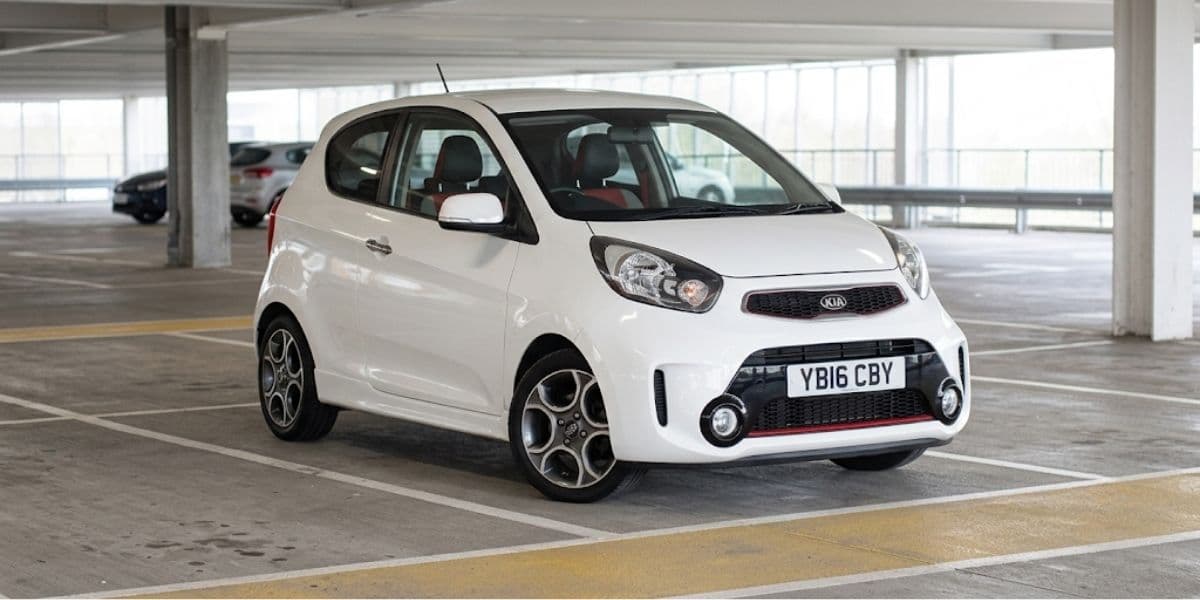
The wrap
The 1.0 DPi Picanto in '2' trim sits in Insurance Group 4. That's one of the cheapest insurance placements of any new-build city car in the UK. AEB is standard on cars from the 2020 facelift onwards. The seven-year warranty is transferable to every subsequent owner. The 8-inch touchscreen runs Apple CarPlay. And the 0–60 time of 15.4 seconds is a feature for a 17-year-old, not a flaw.
It also helps that there isn't much competition. The Ford Ka, Vauxhall Adam, Volkswagen Up!, Citroën C1 and Peugeot 108 are all discontinued. The Picanto, the Hyundai i10 and the Toyota Aygo X are the only pure city cars still in production, and the Picanto is the cheapest of the three to insure.
The trade-off is the AMT automatic gearbox (avoid it), motorway cruising (the 1.0L works hard at 70mph) and a three-star Euro NCAP rating that becomes four stars only with the optional safety pack on early JA cars.
Quick facts
| Metric | Value |
|---|---|
| Generations covered | SA (2004–2011), TA (2011–2017), JA (2017–present) |
| Insurance Groups | 4–8 depending on engine and trim |
| Used Price Range | £800–£15,000+ |
| Euro NCAP | 3★ (JA, 2017); 4★ with safety pack; 4★ (TA, 2011); 4★ (SA, 2004) |
| Best Engine | 1.0 DPi 67PS manual (JA), Insurance Group 4 |
| Annual Road Tax | £200 flat rate (post-April 2017); CO2-banded for pre-2017 |
| Est. Annual Running Cost | £2,400–£3,800 for a 17–21 year old with a telematics policy |
| Boot space | 255 litres (JA) |
| Warranty | 7 years / 100,000 miles, transferable |
| Common Issues | AMT gear selection (JA), alloy corrosion (TA), crankshaft pulley bolt (SA), parasitic battery drain (JA) |
Insurance groups sourced from ABI/Thatcham Research. Running costs estimated for a 17–21 year old with a black box policy.
Who is this car for?
The Picanto is built for new drivers who want a low insurance premium on a car that's still under manufacturer warranty if you get a newer one.
Perfect for:
- 17–19 year olds whose first-year insurance is the single biggest cost in the equation
- Town and short-commute drivers who rarely sit at 70mph for long
- Parents buying a newish car who want a transferable manufacturer warranty
- Anyone who wants AEB and Apple CarPlay without paying Group 8+ insurance to get them
Not ideal for:
- Regular motorway commuters
- Anyone needing comfortable rear seats for two adults, the rear bench is tight
- Drivers limited to an automatic licence, see the AMT section below before signing anything
- People who need a big boot
"The Kia Picanto is a quirky-looking thing that's great around town. It's just a shame that it doesn't fill you with confidence on the motorway."
For a wider view of the cheap-to-insure end of the market, our best first cars 2026 guide ranks the Picanto against the Hyundai i10, Toyota Aygo X and used Up!/Mii/Citigo trio.
The three generations: SA vs TA vs JA
The Picanto has been on UK roads since 2004 and there are three distinct generations on the used market. Pick the one that fits the budget, then narrow down the search by engine.
| SA (2004–2011) | TA (2011–2017) | JA (2017–present) | |
|---|---|---|---|
| Chassis code | SA | TA | JA |
| Typical used price | £800–£2,500 | £2,500–£6,000 | £6,000–£15,000+ |
| Best engine | 1.0 12V petrol | 1.0 12V petrol | 1.0 DPi 67PS manual |
| Insurance Group | 7–9 | 4–6 | 4–8 |
| Boot space | 157 litres | 200 litres | 255 litres |
| Euro NCAP | 4★ (2004) | 4★ (2011) | 3★ (2017), 4★ with safety pack |
| AEB as standard | No | No | Yes on most post-2020 cars |
| Apple CarPlay | No | No | Standard from 2020 facelift |
| Body styles | 3-door, 5-door | 3-door, 5-door | 5-door only |
| Warranty remaining | None | None | Up to 3 years on 2023+ cars |
The JA is the pick if the budget is there. The TA is the value choice: modern enough for solid safety, cheap enough that insurance and depreciation aren't a worry. The SA only makes sense at the bottom of the market for short-distance, town-only use.
Driving and performance
SA (2004–2011)
Light, simple and dated. The 1.0 12V three-cylinder is the sensible pick: basic injection, no turbo, easy for any independent garage to fix. The 1.1 four-cylinder is smoother but harder to find. There's no stability control on early base trims and no driver aids beyond ABS and dual front airbags.
The steering is light, the turning circle is tight and the visibility is good. As a town runaround for a 17-year-old who needs cheap mobility, it works. As a motorway car or a long-commute car, it doesn't.
TA (2011–2017)
A clear step up. The cabin is quieter, the dashboard plastics are better and Kia offered a three-door variant with a sportier roofline that some teens prefer. ESP became standard, the airbag count increased and the ride is passable on a B-road.
Engine options for a new driver:
- 1.0 12V 68PS: Group 4–5, fine for town, a bit breathless above 60mph
- 1.25 16V 84PS: Group 5–6, more usable on faster roads
- Avoid the LPG variants unless there's a specialist nearby. Fuel network coverage is patchy.
The TA is mechanically simple, the parts catalogue is shared with the Hyundai i10 and any independent garage can service one for £150–£200.
JA (2017–present)
Comprehensive redesign. The wheelbase grew by 15mm, the cabin feels half a size bigger and the styling went aggressive with the Tiger Nose grille. The 2020 facelift standardised an 8-inch touchscreen across the range. The 2024 facelift gave it the EV9-influenced face: vertical lights, rear LED bar and a digital driver display.
Engines that matter for a new driver:
- 1.0 DPi 62–67PS manual: Group 4 in '2' trim, Group 5 in '3' or GT-Line. The insurance hero. 0–60 in 15.4 seconds, real-world fuel economy of 45–50mpg in mixed driving.
- 1.2 DPi 77PS manual: Group 8. Quicker (0–60 in 13.1s), more relaxed at motorway speeds, but the insurance jump rarely justifies it for a first-year driver.
- 1.2 DPi 77PS AMT auto: Group 5 (yes, lower than the manual 1.2). Don't be tempted. See below.
"This is all about cheap and cheerful driving, just nipping in and around town. This isn't meant to be some big motorway miler."
For a new driver the calculation is simple: the manual 1.0 saves enough on insurance to outweigh anything the 1.2 offers. If a 17-year-old does mostly motorway miles, look at a Hyundai i10 on the higher-spec engine instead. It rides better at speed.
The AMT automatic problem
Kia replaced the torque-converter automatic with a five-speed Automated Manual Transmission (AMT) on modern Picantos. An AMT is a manual gearbox with a robot operating the clutch.
It's slow and clunky. The 0–60 time stretches to 18.2 seconds. The first-to-second shift is notoriously lethargic: the car loses momentum exactly when a new driver pulling out of a junction needs power. Forum and reviewer consensus is consistent on this.
"The auto gearbox is comically bad. I think it's a robotised manual with 5 speeds and a single clutch. Gear shifts take aeons and are very intrusive — the transition from 1 to 2 is particularly distracting."
If a learner has an automatic-only licence, our best automatic first cars guide covers cars with proper torque-converter or dual-clutch boxes. The Picanto AMT shouldn't be on that list.
Technology and interior
SA (2004–2011)
No touchscreen, no Bluetooth as standard, an AUX jack on later trims. A £100 aftermarket head unit gets it to a usable place for a teenager's phone. Hard plastics throughout, but everything works and there's nothing fancy to break.
TA (2011–2017)
Pre-2015 cars use a basic radio. The 2015 facelift brought a small colour screen on higher trims and started adding Bluetooth as standard. No CarPlay, no Android Auto. A retrofit head unit is the only path to smartphone mirroring.
The cabin is roomier than the SA but rear headroom is still snug. The 200-litre boot is enough for a weekly shop.
JA (2017–present)
The 2020 facelift was the inflection point. From that update on, every Picanto leaves the factory with an 8-inch touchscreen, Apple CarPlay, Android Auto, DAB and a reversing camera. The 2024 facelift added a digital driver display alongside the touchscreen.
The interior layout is the right mix of modern and tactile. Climate control stays on physical knobs and buttons, not buried inside a touchscreen sub-menu. For a new driver, that means defogging a window or turning down the heat without taking their eyes off the road. Underrated detail.
The 255-litre boot is the biggest in the Picanto's history and beats the Toyota Yaris supermini in raw seats-up volume on the older car. Higher trims add a height-adjustable boot floor with hidden storage underneath.
Rear seats are tight. The Picanto is homologated as a five-seater on some configurations, but realistically the back is for two passengers on short trips. For parents, that's not always a bad thing: fewer mates in the car means fewer distractions.
Safety
SA (2004–2011)
A 4-star Euro NCAP rating from the early 2000s test, which was a softer test than today's. ABS and dual front airbags only on base trims. No stability control on most cars. By 2026 standards this is basic.
TA (2011–2017)
A 4-star rating from the 2011 test. ESP became standard across the range, airbag coverage is better and the structure is a real step up. Still no AEB, still no lane assist. Active safety arrives with the JA.
JA (2017–present)
A 3-star rating in the 2017 test, rising to 4 stars when the optional safety pack is fitted. The granular scores were 79% adult occupant, 64% child occupant, 54% vulnerable road users and 25% safety assist on base equipment.
The 25% safety assist score is the bit that makes parents anxious, but the score reflects what was standard in 2017, not what's available now. From the 2020 facelift onwards, Kia standardised six airbags, Lane Keeping Assist, Adaptive Cruise Control, Speed Limit Recognition and AEB. GT-Line S adds Blind Spot Monitoring and Junction Turning Collision Avoidance.
For parents, the practical safety divide on the Picanto is pre-2020 versus post-2020. Post-2020 JA cars have AEB, six airbags and Lane Keeping Assist as standard. Pre-2020 JA cars only have all of that if the previous owner ticked the safety pack at order. AEB is the feature that does the most for a new driver: low-speed urban crashes are the most common type of accident for 17–19 year olds, and AEB is the system that stops them.
Recalls to check
Two recent UK recalls affect the JA generation and need verifying on any used example:
- 2024 ISLA software update: affects 1,007 vehicles. Speed Limit Assist software fault.
- 2024 EGR valve replacement: affects 844 vehicles. Short-circuit risk that can stall the engine.
Older recalls cover rear brake caliper corrosion (handbrake failure on inclines) and fuel filler neck cracking. Check both have been completed via the DVLA recall checker before buying.
Running costs and ownership
Insurance
This is where the Picanto wins. RAC research puts insurance as the biggest cost concern for 44% of 17–24 year old drivers, and the Picanto is built specifically for that pressure point. Small engine, low repair cost, low theft rate, low repair complexity. The result is one of the lowest insurance group placements of any car on sale.
| Generation | Engine / trim | Insurance Group |
|---|---|---|
| JA | 1.0 DPi '2' (manual) | 4 |
| JA | 1.0 DPi '3' / GT-Line (manual) | 5 |
| JA | 1.2 DPi GT-Line S (manual) | 8 |
| JA | 1.2 DPi GT-Line S (AMT auto) | 5 |
| TA | 1.0 12V '1 Air' / '2' | 4–5 |
| TA | 1.25 '3' | 5–6 |
| SA | 1.0 / 1.1 (post-2007) | 7–9 |
The UK average insurance premium for a new driver is around £1,640. Real-world quotes for an 18-year-old on a 1.0 DPi Picanto with a telematics policy land between £1,200 and £1,400, a saving of £240–£440 a year that almost completely offsets servicing costs. For a deeper look at how groups translate into quotes, see our insurance groups explained guide.
Picanto vs the other surviving city cars on insurance:
| Car | Best base insurance group |
|---|---|
| Hyundai i10 1.0 Advance | 1–2 |
| Kia Picanto 1.0 DPi '2' | 4 |
| Toyota Aygo X Pure | 6 |
The i10 is technically cheaper to insure than the Picanto on the lowest trim, but the Picanto generally wins on warranty length and standard equipment at the same price point. See our Hyundai i10 review for the head-to-head.
Fuel economy
| Engine | Real-world combined mpg |
|---|---|
| 1.0 DPi (JA) | 45–50 mpg |
| 1.2 DPi (JA) | 42–46 mpg |
| 1.0 12V (TA) | 42–48 mpg |
| 1.25 16V (TA) | 38–42 mpg |
| 1.0 / 1.1 (SA) | 38–45 mpg |
The WLTP figure for the 1.0 DPi is 55.4mpg. Real-world urban driving sits closer to 35–40mpg because the small engine works hard. Disciplined motorway cruising can push past 60mpg.
Road tax
Post-April 2017 Picantos pay the £200 flat VED rate. Pre-2017 cars pay on CO2 emissions instead. A 1.0L TA can sit at £30 a year, which is meaningfully cheap.
ULEZ and Clean Air Zones: every petrol Picanto sold in the UK meets at least Euro 4, which means none of them attract the £12.50 daily ULEZ charge in London or the equivalent Clean Air Zone fees in Birmingham, Bristol, Sheffield or Newcastle. That's the case across all three generations, including the cheapest 2007 SA. For more detail on which zones apply where, see our low emission zones guide for young drivers.
Servicing
Service interval is 10,000 miles or 12 months, whichever comes first. Late or missed services void the seven-year warranty, so this matters more on a Kia than on most cars.
| Service | Kia main dealer | Independent |
|---|---|---|
| Kia Care 2-service plan | £399 | n/a |
| Kia Care 3-service plan | £539 | n/a |
| Annual service (single) | £184 | £120–£160 |
| Interim service | £130 | £80–£110 |
| Front brake pads (fitted) | £95 | £70–£90 |
| Clutch replacement | £299 | £400–£550 |
The Kia Care plan is the right move on a JA still under warranty: it locks in dealer servicing at current rates, which keeps the warranty intact and protects against price inflation. Independent servicing is fine on out-of-warranty TA and SA cars.
Annual running cost (17 to 21 year old)
| Cost item | SA 1.0 manual | TA 1.0 manual | JA 1.0 DPi manual |
|---|---|---|---|
| Insurance (with telematics) | £1,400–£1,900 | £1,200–£1,600 | £1,200–£1,400 |
| Fuel (8,000 miles) | £950 | £900 | £850 |
| Road tax | £30–£180 | £30–£180 | £200 |
| Servicing | £150–£250 | £150–£250 | £200–£270 |
| Total | £2,530–£3,280 | £2,280–£2,930 | £2,450–£2,720 |
The JA often works out cheapest year one despite the higher purchase price, because the insurance saving compounds. At 17–21, insurance is the running cost.
What to watch: known issues
Crankshaft pulley bolt (SA only)
The most serious issue on a first-generation car. The crank pulley bolt can work loose, causing the position sensor to misread and, in the worst cases, the crankshaft to snap behind the timing gear. Symptoms are erratic idling and intermittent power loss. If you're viewing an SA, ask whether the bolt has been checked or replaced. If the answer is no, walk.
Alloy wheel corrosion (TA)
Cosmetic but expensive. White corrosion under the lacquer is widespread on TA alloys and Kia UK has historically refused to honour it under warranty as “wear and tear.” It hits residual values. Easy to spot during a viewing.
AMT gear engagement (JA, automatic only)
The AMT can fail to select fourth gear cleanly, throwing a fault code and dropping into limp mode. The fix is a software update or, in stubborn cases, a clutch actuator replacement. Another reason to stick to the manual.
Parasitic battery drain (JA)
Multiple owner reports of dead batteries after the car sits for a few days. The infotainment system or alternator is usually the culprit. Often resolved with a software update from a Kia dealer. Verify it's been applied on any 2017–2022 car.
Humming rear brakes (TA)
A consistent low-frequency hum from the rear at low speeds, often from caliper slide pin seizure or pad glazing. Usually fixed under £100 at an independent.
MOT watch points
DVSA data shows lighting (blown bulbs, headlamp aim) and tyre tread are the two most common Picanto MOT failures. A five-minute walkaround before the test catches both. Suspension drop links go after 50,000 miles, so listen for a knock over speed bumps.
Viewing checklist
- Cold-start it yourself. Listen for any rattle in the first 10 seconds, especially on the JA 1.0 DPi.
- Check the Government MOT history before the viewing. Repeated advisories on the same item are deferred work you'll inherit.
- Check the DVLA recall site for the specific VIN, especially on 2017–2024 JA cars.
- Inspect the alloy wheels for white corrosion if it's a TA.
- For automatic cars, test it from cold and ask for proof the software is up to date.
- For SA cars, ask about the crankshaft pulley bolt before agreeing a price.
For the full pre-purchase walkaround on any used car, our used car inspection guide for young drivers goes through it step by step.
The best variant to buy
The safe bet: newly qualified 17 to 19 year old
2021–2024 JA in 1.0 DPi '2' or '3', manual gearbox.
- Insurance: Group 4 ('2') or Group 5 ('3' / GT-Line)
- Tech: 8-inch touchscreen, Apple CarPlay, reversing camera all standard
- Safety: AEB, Lane Keeping Assist, Speed Limit Recognition standard
- Warranty: 1–4 years remaining depending on registration date
- Budget: £8,000–£11,500 with a Kia-stamped service book
Budget pick (£3,000–£5,000)
2014–2017 TA in 1.0 12V '2' or '3'.
- Insurance: Group 4–5
- Tech: Bluetooth on facelifted cars, basic radio on earlier ones
- Safety: ESP standard, no AEB
- Trade-off: No active safety, no smartphone mirroring. Engineered well, mechanically simple, easy to fix.
Tight budget (under £2,500)
2007–2011 SA in 1.0 12V.
- Insurance: Group 7–9
- For town-only use. Accept that there's no AEB, no stability control on base trims and a 4-star rating from a much softer test era.
If the under-£2,500 budget is the hard constraint, also see our best first cars under £3,000 guide for alternatives that pair a cheap purchase price with a reasonable insurance group.
For keen drivers at 21+
JA in 1.2 DPi GT-Line S, manual.
- Insurance: Group 8. This is a second-year car, not a first car
- More performance, better motorway composure, Blind Spot Monitoring
- Budget: £11,000–£14,500
Avoid
- Any Picanto with the AMT automatic gearbox unless an automatic-only licence is the constraint
- Any SA without proof the crank pulley bolt has been checked
- Any 2017–2018 JA without recall work confirmed
- TA cars where the alloys have visible white corrosion you'd inherit
The verdict
The Kia Picanto is the most insurance-efficient new-build first car on the UK market in 2026. The combination of Group 4 placement, AEB as standard, Apple CarPlay as standard and a transferable seven-year warranty is unique in this segment. The Hyundai i10 (its corporate sibling) gets close on most of those metrics but rides better at motorway speeds and tends to land slightly higher on insurance. The Toyota Aygo X is more characterful but more expensive to insure and to buy.
It's not perfect. The 1.0 DPi is strained at 70mph. The AMT gearbox should not exist. The base Euro NCAP score is three stars without the safety pack. None of these are deal-breakers for the brief: short-distance, low-cost, low-stress motoring for a new driver.
Pros
- Insurance Group 4 on the 1.0 DPi '2', one of the lowest in the UK
- AEB standard from 2020 facelift onwards
- Apple CarPlay and Android Auto standard from 2020 facelift
- Seven-year, 100,000-mile warranty, fully transferable to subsequent owners
- Three current generations on the used market means options at every budget
- Physical climate buttons that don't make the driver dig through menus
Cons
- 1.0 DPi works hard above 65mph and is loud at motorway speeds
- AMT automatic gearbox is poor: slow shifts and a lurching first-to-second
- 3-star Euro NCAP base score on early JA cars (4-star with safety pack)
- 255-litre boot beats the Aygo X but trails the VW Polo and SEAT Ibiza for kit-carrying
- Rear seats are tight for adult passengers
Final word
The one to buy: 2021–2024 JA in 1.0 DPi '2' or '3', manual, with the warranty intact and recalls confirmed. Budget £8,000–£11,500. AEB, Apple CarPlay and a transferable seven-year warranty for Group 4–5 insurance is the strongest combination on the UK first-car market in 2026.
Also worth reading before you decide: our Hyundai i10 review covers the Picanto's closest sibling (same Hyundai-Kia A-segment platform, slightly better motorway ride, slightly higher insurance), and the Fiat 500 review covers the city-car alternative teens most often ask for. For a wider sense of where the Picanto sits versus larger superminis, the Ford Fiesta vs Vauxhall Corsa comparison, the SEAT Ibiza review and the VW Up! review are the right next reads.