Volkswagen Up! Review for Young UK Drivers (2026): The Group 1 First Car That Punches Above Its Price
The wrap
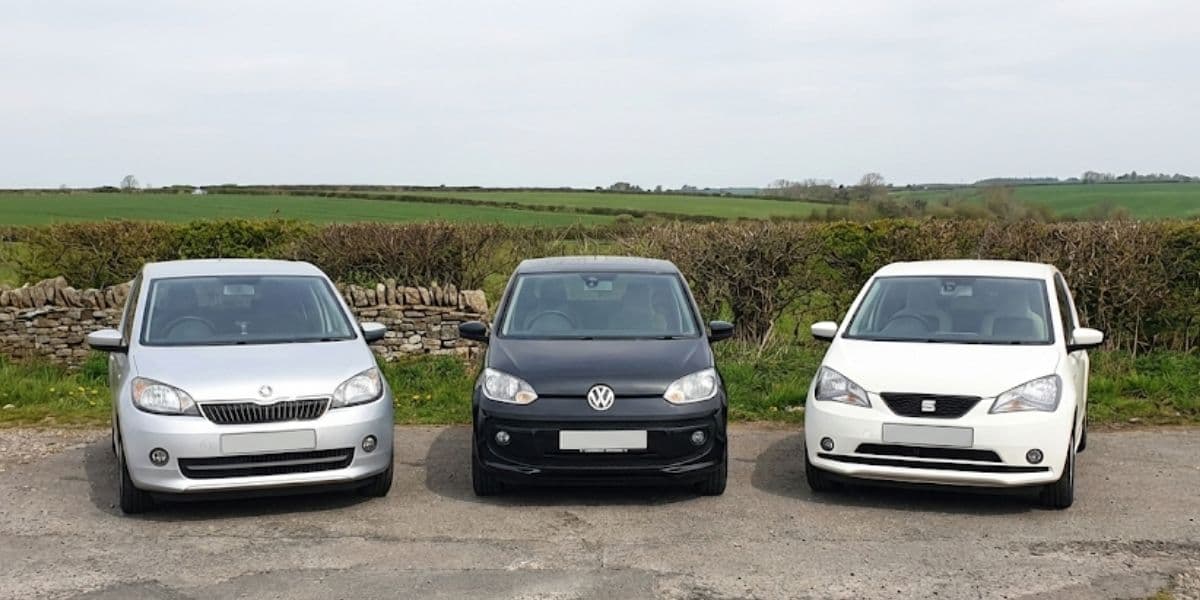
The VW Up!, Skoda Citigo and SEAT Mii are three badges on the same car, built at the same Volkswagen Group factory in Bratislava. All three sit in insurance Group 1 in base trim and return close to 60 mpg in real world driving. All three hold a five-star Euro NCAP safety rating. The only meaningful decisions are which badge to buy, which trim to target and what to check when you go to view one. The Up! and its cousins are one of the best first cars you can buy.
Quick facts
| Metric | Value |
|---|---|
| Insurance Groups | Groups 1–5 (engine and trim dependent); Up! GTI is Group 17 |
| Used Price Range | £3,500–£7,500 (2016–2019) |
| Euro NCAP | 5 stars (2011 test) |
| Best Engine | 1.0-litre MPI 59 bhp — manual gearbox only |
| Annual Road Tax | £0–£20 (pre-April 2017); ~£195 flat rate (post-April 2017) |
| Boot Space | 251 litres (951 litres with rear seats folded) |
| Always Check | Lift the boot carpet and check for dampness |
Who is this car for?
Perfect for:
- Teenagers who drive mostly short journeys
- Families who want to keep first year running costs under control
- Parents who want cheap running costs AND a car that is safe and reliable
Not ideal for:
- Regular long distance motorway driving
- Anyone who needs to carry five people (no rear middle seatbelt)
- Drivers who want a bigger car
The Up!/Citigo/Mii is designed for urban driving. These cars were built to a high standard and tend to age well when properly maintained. The rear bench has no middle seatbelt, so if you could squeeze in a 3rd person they wouldn't have a seatbelt. Rear legroom is ok for short trips, not comfortable for long journeys.
Driving and performance
The VW Up! is brilliant in town. The wheelbase is 2,420 mm and kerb weight sits around 930 kg (Goodwood), giving the VW Up! chassis an agile feel that is good for new drivers. The steering is light at low speeds and weights up predictably as speed builds. The VW Up! is easy to park.
The standard 1.0-litre MPI engine produces 59 bhp. Official 0–62 mph takes 15 seconds in manual form, which looks slow on paper. In urban traffic it feels fine. The power delivery is smooth and progressive, the clutch is light and the five speed gearbox feels good.
On the motorway
The VW Up!, Skoda Citigo and SEAT Mii behave far better at high speed than their A-segment rivals. Where the Toyota Aygo or Peugeot 108 can feel nervous and light in crosswinds on the motorway, the VAG trio feels planted and secure. The VW Up! won't match a Ford Fiesta or Vauxhall Corsa for outright motorway refinement, but for a city car the stability is exceptional.
"I continue to be surprised at how solid it feels on the motorway. You really wouldn't think you're in a 1-litre city car."
The VW Up! is slow, so safe overtaking requires planning. The 59 bhp engine needs third or fourth gear and the full rev range to pass a big truck. Drop a gear early, not at the last moment and the VW Up! does the job. The three-cylinder emits a characterful thrum under hard acceleration, then settles to a quiet hum at a 70 mph cruise.
"If you like your car small fun and for life around the city these are the perfect fit."
The 59 bhp vs 74 bhp version
The 74 bhp engine feels virtually identical to the 59 bhp below 4,000 rpm because it's the same engine with a different ECU setting. The insurance premium difference between Group 1 and Group 5 makes the 59 bhp version the cheaper one to insure.
Avoid the ASG automatic
The ASG (Automated Shift Gearbox) is not a smooth torque-converter or a dual-clutch system. It is a standard five-speed manual gearbox with robotic actuators bolted on to press the clutch and change gears. It is notoriously jerky, hesitant at roundabouts and unreliable in slow traffic. Buy the manual or if you have an auto-only license, choose a different car.
The Up! GTI
The VW Up! GTI has a strong reputation with car enthusiasts. The Up! GTI uses a turbocharged 1.0 TSI producing 114 bhp, hits 62 mph in 8.8 seconds (Volkswagen UK) and sits in insurance Group 17 (Thatcham Research). The Up! GTI is brilliant but too expensive to insure for a 17 year old.
"It's a characterful little car and one that really raises a smile... it turns every journey into a funfair ride."
Urban driving
Agile, easy to park and confidence inspiring for new drivers. Motorway capable but needs planning for overtakes.
Technology and interior
The interior uses hard plastics throughout and leaves the exterior body colour metal exposed on the inner door panels. It's a cost cutting measure but it looks cool. The layout is simple and logical, with physical dials for the climate controls rather than distracting touchscreen menus.
The cabin space feels big for such a wee car. The high roofline and large windows gives the interior lots of light, preventing it from feeling claustrophobic despite the small footprint. The boot holds 251 litres with the seats up, which beats the Toyota Aygo (168 litres) and the Fiat 500 (185 litres) convincingly. Fold the rear bench and the car opens to 951 litres (enough for a mountain bike with the front wheel off).
The main ergonomic frustration: the steering wheel adjusts for height only, not reach. Taller drivers with longer legs may struggle to find a comfortable seating position.
Infotainment: the two eras
Pre-facelift (2012–2015): A Garmin detachable screen that clipped onto a stalk on the dashboard. Functional at the time, but outdated by 2026 standards and prone to failure.
Post-facelift (from 2016): Volkswagen removed the built-in screen and replaced it with an adjustable smartphone cradle built directly into the dashboard centre. Clip your phone in, connect to the USB port and your phone handlessat nav and music. The technology ages with your phone rather than becoming obsolete. This is a good setup.
One thing to know on early three-door models: the front seats do not return to position after you tilt them forward to let rear passengers in. You will be manually readjusting the backrest angle every time someone gets in the back. It sounds trivial. Six months of daily use becomes annoying.
Teen appeal
Interior is basic but the post-2016 smartphone cradle keeps infotainment current. Often teenage boys prefer a bigger car.
Safety
The VW Up! platform was awarded five stars by Euro NCAP in its 2011 launch test (euroncap.com) — the maximum rating, at a time when the test genuinely challenged small cars. Electronic Stability Control is standard across the VW Up!, Skoda Citigo and SEAT Mii range. Multiple airbags. A crash structure that outperforms older A-segment rivals from the same era.
This is where the VAG trio separates from competitors. The Toyota Aygo, Peugeot 108 and Citroën C1 of the same generation did not match this safety performance. For parents making the final call, the five-star rating carries real weight.
It's worth remembering that the 2011 test is now 15 years old. Euro NCAP protocols have changed since then and ratings can't be compared directly across test generations. Within its era, the Up! scored at the top of its class. It does not have the active safety systems you would find on a modern Polo, no autonomous emergency braking or lane assist. The safety basics are well covered though.
Parent peace of mind
Five star Euro NCAP (2011 test) with ESC standard. No active safety systems, but crash protection outperforms rivals from the same era.
Running costs and ownership
This is where the case for these cars is made.
Insurance
According to Thatcham Research and the Association of British Insurers (ABI), the 59 bhp base models across all three badges sit in Insurance Group 1 — the lowest possible rating on the ABI's 1 to 50 scale. Even stepping up to the sportier trims only moves you to Group 2 or 3. The average premium for a 17 year old currently sits between £1,700 and £2,500 a year (Zego, 2026), making Group 1 cars like the VW Up! essential for keeping costs manageable.
| Model and Trim | Engine | Insurance Group |
|---|---|---|
| VW Take Up! / Skoda Citigo S / SEAT Mii S | 59 bhp | Group 1 |
| VW Move Up! / Citigo SE / Mii SE | 59 bhp | Group 1–2 |
| VW Up! Beats / Citigo Monte Carlo / Mii FR-Line | 59 bhp | Group 2–3 |
| VW High Up! | 74 bhp | Group 5 |
| VW Up! GTI | 114 bhp | Group 17 |
Road tax
Cars registered before 1 April 2017 fall under the old emissions-based VED system (GOV.UK). The VW Up!'s 1.0 MPI produces 96–108 g/km of CO2 (GreenCarGuide), putting these models in Band A or B: £0 or £20 per year. Cars registered after 1 April 2017 pay the flat rate, currently around £195 per year (RAC, 2026). A savvy buyer can save hundreds of pounds over a few years simply by seeking out a late 2016 VW Up! rather than a mechanically identical 2018 model.
Fuel economy
Official Volkswagen figures claim 62.9 mpg extra-urban and 49.7 mpg urban (GreenCarGuide). Owners consistently report figures close to these numbers. As one long-term owner documented: "Even on short journeys I'm getting very close to 60 mpg... over 400 miles between fill ups for less than £40" (PistonHeads). At current UK pump prices, you are looking at roughly £35–£45 to fill the VW Up! from empty.
Servicing
Servicing at an independent specialist costs around £180–£245 for a minor service and £276–£350 for a major service every two years (Kwik Fit, 2026). The VW Up!'s 1.0 MPI engine holds only 3.4 litres of oil (Volkswagen UK) — an unusually small reservoir with zero safety margin if it runs low. Check the dipstick every two weeks and top up with 5W-30 synthetic before it drops below minimum.
The cambelt situation
There is a lot of confusing information online about the VW Up! cambelt, driven largely by dealers pushing unnecessary replacement work. The actual manufacturer specification for the Teflon-coated belt on the 1.0 MPI is 15 years or 180,000 miles. Skoda Customer Services officially confirmed this interval in writing to owners (r/CarTalkUK, via owner correspondence). Get the VW Up! cambelt visually inspected at each service to check for cracking or fraying, but resist a dealer quoting £400–£500 for a replacement the car does not need (PistonHeads).
What to watch: known issues
Water ingress in the boot
Lift the boot carpet and press down firmly on the spare wheel well. It should be completely dry. Standing water means the car has a leak.
The most common and most widely documented problem across the entire platform. Standing water leads to interior mould, persistent window fogging in winter and eventually electrical failures.
The two most common sources: blocked scuttle drains (debris building up under the plastic cowl at the windscreen base, eventually overflowing into the passenger footwells) and perished rubber seals around the rear light clusters and boot lid. On cars with a sunroof, the internal drain tubes running down the A-pillars can disconnect and pour water directly onto the seats.
A blocked drain is a cheap fix. Widespread seal replacement and electrical damage is not. A professional diagnostic and repair for a VW Up! water leak at an independent garage typically ranges from £40 to £350 depending on severity (Bumper, 2026). The condition of the boot carpet tells you everything before you even open the bonnet.
Clutch wear
City cars spend their working lives in stop-start traffic and the clutch wears accordingly. Signs to check for on the VW Up!: engine revs rising under acceleration without the car speeding up proportionally, a stiff or very high biting point, difficulty selecting first from a standstill. A full clutch replacement on the VW Up! costs around £325–£450 at independent specialists (Motorway, 2026). On any VW Up! over 60,000 miles, ask for service records showing when the clutch was last replaced.
Rear drum brake binding
The rear wheels use drum brakes rather than discs. In damp conditions the brake shoes can seize against the drum surface after the car has been sitting. You release the handbrake, pull away and find the rear wheels dragging. The handbrake cables are also prone to freezing and corroding internally over winter. Ask when the rear drums were last cleaned out and inspected.
Oil consumption
With only 3.4 litres in the sump, even modest consumption causes problems quickly. Some higher mileage examples develop a habit of burning oil between services. Check the dipstick at the start of your test drive. If the seller cannot remember when they last checked it, that is information.
What to check when viewing
- Boot spare wheel well: lift the carpet, press down. Must be completely dry.
- Scuttle drains: check under the plastic cowl at the windscreen base for debris
- Clutch feel: check biting point height and any slipping under acceleration
- Dipstick: oil level should be between min and max on a cold engine
- Rear brakes: listen for dragging or grinding when pulling away
- Gearbox type: confirm it is a manual, not the ASG automatic
VW, Skoda or SEAT: which badge to buy
Mechanically, they are identical. Same production line in Bratislava, same engine, same gearbox, same suspension geometry. The decision comes down to budget, trim availability and which specific features matter. Often the Skodas and SEATs are cheaper.
VW Up!
The most expensive to buy used because of the badge. The distinctive all glass tailgate at the rear sets it apart visually from the other two. The Up! Beats trim offers a 300 watt seven speaker Beats audio system with a subwoofer hidden in the spare wheel well. If you find a Move Up! or High Up! with full service history at the right price, it is a solid choice.
Skoda Citigo
Typically the cheapest of the three on the used market. Functionally identical to the VW, without the badge premium or the glass tailgate. The Monte Carlo trim is worth seeking out specifically: lowered sports suspension dropping the ride height by 15 mm, gloss black bodywork details, a sorty front splitter, darkened tail lights and red and black sports seats. And it still sits in Group 2 or 3 for insurance. For a teenager who wants the car to look good without paying the insurance penalty, this is the one.
SEAT Mii
Sold in smaller numbers than the other two and harder to find used. Slightly sharper exterior styling than the Citigo, similar pricing. The FR-Line trim mirrors the Monte Carlo's lowered suspension and sporty interior. On roads with heavy potholes, the firmer ride of the sports suspension trims becomes noticeable.
The universal owner advice: buy whichever has the best service history at the right mileage. Do not pay a badge premium for the VW if a well maintained Citigo is sitting next to it at a lower price.
The best variant to buy
Best overall: 2016–2019 VW Move Up! or Skoda Citigo SE, 59 bhp manual
Why: The 2016 facelift brought the smartphone cradle system and minor comfort improvements. Cars registered before 1 April 2017 save around £175 per year on road tax. The 59 bhp engine sits in Group 1. The Move Up! and SE trims add air conditioning, Bluetooth connectivity and an adjustable driver's seat without moving the insurance group. Expected price: £4,500–£7,500 depending on mileage and condition. Full service history under 70,000 miles is the target.
Budget conscious: pre-facelift 2014–2015 model
Why: Works well mechanically. Accept that the Garmin PID infotainment will feel dated; factor in the cost of a proper phone mount and charging cable as a workaround. Budget under £4,000.
Best looking: Citigo Monte Carlo or Mii FR-Line (59 bhp)
Why: Insurance stays at Group 2–3. Lowered suspension, sporty styling and red and black interior. Be aware the lowered suspension makes the ride noticeably firmer on poor road surfaces.
Electric option: e-Up! / Citigo-e iV / Mii Electric
Why: 36.8 kWh battery yielding a real world range of 140–170 miles and running costs fall to pennies per mile on an overnight tariff. One critical check: some base-spec Citigo-e iV models were sold without CCS rapid charging hardware. Without CCS, the car cannot accept DC rapid charging at motorway service stations. Check behind the charging flap for the two lower DC pins before buying any used electric variant.
Avoid
- The ASG automatic under any circumstances
- Any car where the seller is vague about service history
- Sunroof-equipped examples unless you can confirm the drain tubes have been inspected
- Any boot carpet that feels damp on your test drive
The verdict
The VW Up!, Skoda Citigo and SEAT Mii are among the best first car options on the used market right now. Group 1 insurance, genuine five-star safety, real world fuel economy close to official figures and a build quality that substantially outperforms French city car rivals from the same era.
The limitations: the interior is a bit plasticy, rear passengers on longer journeys will notice the cramped bench and water ingress is widespread enough across the platform that you must physically check for it on every single car you view. These are reasons to be selective, not reasons to avoid the platform.
Pros
- Insurance Group 1 in base trim
- Five-star Euro NCAP (2011 test)
- Real world fuel economy close to official figures; regularly achieves 400 miles per tank
- Pre-April 2017 models: £0 or £20 annual road tax
- Boot (251 litres) is larger than most A-segment rivals
- Strong used market supply across all three badges
Cons
- Water ingress is widespread, check on every test drive
- ASG automatic is unreliable and should be avoided entirely
- Interior quality is basic: hard plastics, exposed metal door panels
- Pre-facelift Garmin infotainment is now outdated
- Rear drum brakes require periodic attention to prevent binding
Buy it if you want the lowest possible insurance bill, your teenager drives mostly in town and you can find a 2016–2019 example with full service history and a dry boot.
Look elsewhere if regular motorway driving is the reality, you want something bigger or an automatic.