Hyundai i20 Insurance Groups: A Parent's Guide (2026)
The short answer
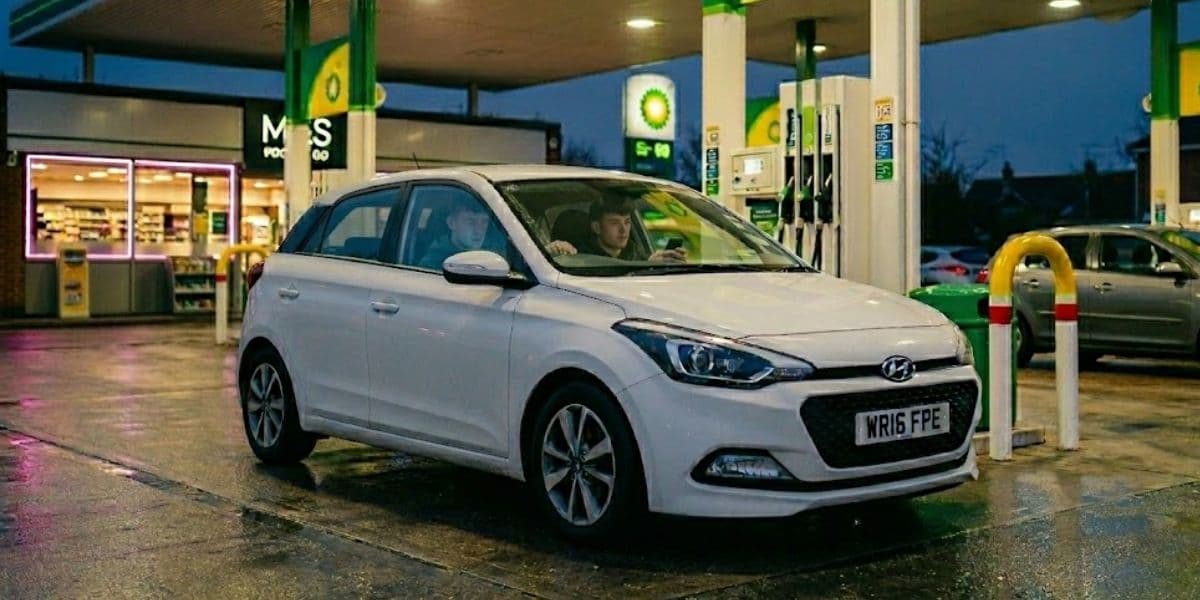
The Hyundai i20 is one of the rare superminis where a 17 year old pays close to what the headline insurance group suggests. Group 4 at the floor of the Mk2 range, and unlike the Ford Fiesta and Vauxhall Corsa at similar headline groups, the i20's historical buyer pool skews older. Retirees, second-car households, conservative families. That cleaner claims pool means a 17 year old in a group 4 Mk2 i20 routinely quotes hundreds of pounds cheaper than the same age in a group 2 Fiesta.
Best buy for the lowest premium: a 2015-2020 Mk2 1.2 MPI 75PS in S or S Air trim (group 4). Slow, simple, cheap to repair, cheap to insure.
Best buy for an experienced young driver (1-2 years NCD): Mk2 1.0 T-GDi 100PS SE Hatchback (group 10). Turbo torque for safe motorway merges, modern enough to feel current, still in the affordable band.
Avoid: every Mk3 trim above N Line (group 15-16, LED headlight write-off risk) and the i20 N (group 27, uninsurable for under 25s without specialist cover).
Insurance quirks for the Hyundai i20
The i20 is generally straight forward to insure. The costs will be broadly in line with the insurance groups assigned.
- The popularity paradox doesn't exist with the i20. Historically bought by older drivers (retirees, second-car families) thanks to the 5-year warranty. The cleaner claim pool means a 17 year old in a group 4 Mk2 i20 routinely beats the same age in a group 2 Fiesta on the quote.
- 48V Mild Hybrid (MHD) tech is the main cause of the increased insurance costs of the newer Mk3 models. The Mk2 1.2 S sits in group 4; the Mk3 SE Connect on the same mission sits in group 12. Same supermini brief, eight insurance groups apart.
- LED headlight write-off risk on the Mk3. Element and N Line trims run sealed matrix LED clusters. A cracked lens after a parking shunt runs £550+ per unit. Combined with bumper-mounted radar, a £12,000 car is one knock from being written off.
- The Mk2 Coupe is a three-door body with a slightly higher group than the equivalent hatch (5 vs 4).
- Keyless entry on the Mk3 Smart Key trims (Premium, Element) introduces relay/emulator attack vulnerability. Insurers have priced this in; some need a Thatcham-approved steering lock as a condition of cover for high-trim cars in urban postcodes.
Mk2 (GB) (2015-2020)
The Mk2 (2015-2020) is the most insurance-friendly generation of the i20 lineup. Insurance groups span 4 (1.2 MPI S) to 11 (1.0 T-GDi 120PS Premium SE Nav). Alex Robbins, former What Car? used cars editor writing in The Car Expert's Expert Rating review, sums up the underlying economics: the i20's "running costs are decent and the i20 range tends to be very reliable". Fewer claims in the pool, cheaper repairs when they happen, lower group ratings on average.
Two cheapest-tier picks stand out. The 1.2 MPI 75PS in S or S Air trim is in group 4. It's slow with only 75 horsepower in a 1.1-tonne hatch, but it's mechanically simple and the older Hyundai demographic helps keep the insurance costs down. The 1.2 MPI 84PS Coupe SE Blue Drive is a three-door body at group 5, one notch up for the sleeker bumpers. Steve Huntingford, editor of What Car?, picks the i20 Blue out specifically: "the cheapest full-size supermini to qualify for exemption from road tax and the London Congestion Charge".
The mid tier is where the i20 starts to feel modern. The 1.2 MPI 84PS Go SE (group 7) gets a touchscreen, Apple CarPlay and parking sensors. The 1.0 T-GDi 100PS SE Hatchback (group 10) is a good pick for a slightly older young driver or someone with a couple of years of NCD. Turbo torque, modern infotainment, happy on a motorway, still in single digits on the group rating. Typical premium £950-£1,300 for a 19-21 year old with telematics and a year of NCD.
The expensive band is only the Premium SE Nav 1.0 T-GDi 120PS at group 11. One group over the SE for an extra 20PS and sat-nav. Marginal benefit.
No GTI, no N variant, no veryExpensive band on the Mk2.
Watch the trim creep.
The leap from Mk2 1.2 MPI (group 4-7) to Mk2 1.0 T-GDi (group 9-11) is partly due to the turbocharger, intercooler and high-pressure plumbing sitting tightly packaged behind the front bumper. A low-speed collision can damage the expensive mechanical gubbins that can be a £2,000+ repair job.
If the young driver doesn't need motorway pace, the 1.2 MPI is the right call. If they do, the 1.0 T-GDi SE at group 10 is fine. Be aware you're paying a premium for the turbo, and a year's NCD makes a much bigger dent in the quote than the engine choice does.
Also skip the 1.4 CRDi and 1.1 CRDi diesels unless your driver is doing regular long journeys. Short urban trips kill diesel particulate filters (DPFs).
Cheapest to insure(Groups 1–5)
Insurance groups 1-5. The cheapest tier on the road for a young driver. Look here first.
1.2 MPI 75PS Petrol — S / S Air
Group 4The headline pick. Group 4. Naturally aspirated, no turbo behind the bumper, the cheapest bodywork in the range to repair.
1.2 MPI 84PS Petrol — Coupe SE Blue Drive
Group 52015-2018
Three-door Coupe body. One group up for the sleeker bumper assembly. Older demographic keeps quotes friendly.
Mid-range insurance(Groups 6–10)
Insurance groups 6-10. Still affordable for a young driver, especially with an experienced named driver on the policy.
1.2 MPI 84PS Petrol — Go SE / Hatchback Go SE
Group 72016-2019
Mid-trim 1.2 with touchscreen, parking sensors and Apple CarPlay. Group 7. Strong kerb appeal at a low premium.
1.0 T-GDi 100PS Petrol — Active
Group 92016-2020
Crossover-styled i20. First sign of the turbo penalty. Group 9 for the intercooler and extra bodywork.
1.0 T-GDi 100PS Petrol — SE Hatchback
Group 102016-2020
Three-cylinder turbo in the standard hatch. Group 10. Real motorway capability without the Premium SE jump to group 11.
More expensive to insure(Groups 11–20)
Insurance groups 11-20. Not recommended as a first car. Premiums for under 25s typically run £3,000+ a year.
- 1.0 T-GDi 120PS Petrol — Group 11 (Premium SE Nav) — Top Mk2 trim with sat-nav, climate control and 16-inch alloys. 120PS state of tune. One group over the SE for an extra 20PS.
Mk3 (BC3) (2020-present)
The Mk3 (2020-present) is where the i20's insurance profile breaks. Groups start at 12 and climb to 16 for standard passenger models. The cheapest variant, SE Connect 1.0 T-GDi 48V MHD DCT, is group 12. Eight groups above the equivalent Mk2 entry point.
The cause is technological inflation across four axes. The 48V Mild Hybrid system adds a secondary lithium-ion battery and a starter generator that requires high-voltage technician training to service. Matrix LED headlights replace halogens at £550+ per assembly. Radar-based AEB and adaptive cruise sit in the front bumper, requiring static and dynamic recalibration after any minor knock. The dual-clutch transmission costs an order of magnitude more to replace than the Mk2's manual.
Matthew Avery, Director of Research at Thatcham (the body that sets the UK's 1-50 ratings), has noted that "the new Hyundai i20 sets itself apart" when evaluating European fleet safety and insurance data. The Mk3's standard AEB, lane assist and matrix LEDs earn safety credit from Thatcham's algorithm. The same matrix LEDs and radar sensors then take it back on the repair-cost side. Both effects show up in the headline group rating.
Within the Mk3 range, SE Connect (group 12) is a potential young driver choice. N Line (group 15) and Element (group 16) rarely stack as a first car.
Quotes for a 17-19 year old on a group 12-16 Mk3 routinely run £1,800-£3,500 with telematics. By age 25 the same Mk3 SE Connect drops to £500-£650.
Two specific Mk3 issues.
First: the matrix LED headlight write-off cliff. Mk3 Element and N Line trims run sealed matrix LED clusters. OEM units cost £550+ each, and they sit close to the front crash structure. A 5mph parking shunt that damages both headlights and the bumper can run £2,500+ in parts before any labour, radar recalibration or paint blending. On a £12,000 used Mk3, that's close to the write-off threshold. Insurers know this. The high group rating reflects it.
Second: keyless entry on Premium and Element trims. Both come with Hyundai's Smart Key passive entry system, which is vulnerable to relay/emulator attacks (the "Gameboy attack"). Several UK insurers now require a Thatcham-approved steering wheel lock as a condition of cover for high-trim keyless i20s in urban postcodes. Some owners install aftermarket CAN bus immobilisers like the Ghost system. If you do, declare it. Failing to declare a security modification can void the policy.
A regulatory note for any Mk3 first registered from August 2024. The new Vehicle Risk Rating (VRR) system applies. The scale runs 1-99 with separate scores for damage, repair, theft and performance. Public VRR scores aren't available for individual cars yet (insurers are using them internally during the transition), so consumers can't look up a number for a specific i20. The impact shows up directly in the quote. The legacy 1-50 group ratings still run in parallel, and the variant ranking on this page holds, because the inputs feeding both systems are largely the same.
Skip the i20 N for any driver under 25 (group 27, specialist policies only, premiums clear £5,000).
More expensive to insure(Groups 11–20)
Insurance groups 11-20. Not recommended as a first car. Premiums for under 25s typically run £3,000+ a year.
- 1.0 T-GDi 48V MHD 100PS Petrol — Group 12 (SE Connect (DCT)) — Cheapest Mk3. Group 12 with the seven-speed DCT. Mild-hybrid 48V tech raises the baseline four groups above the Mk2 equivalent.
- 1.0 T-GDi 48V MHD 100PS Petrol — Group 15 (N Line) — Body kit, contrast roof, 17-inch alloys, sportier interior. Same 100PS engine as the SE Connect. Three groups for the trim.
- 1.0 T-GDi 100PS Petrol — Group 16 (Element) — Top trim. Group 16. Matrix LED headlights, full ADAS suite, panoramic roof on options pack. The repair-cost ceiling of the standard range.
Don't go there(Groups 21+)
Insurance groups 21+. Avoid for a young driver. Standard insurers won't quote under 25. Specialist policies start at £5,000+ a year.
- 1.6 T-GDi 204PS Petrol — Group 27 (i20 N) — Discontinued hot hatch. 204PS, mechanical LSD, bespoke parts. Group 27. Specialist policies only for under 25s; £5,000+ typical.
Still considering a Hyundai i20? Read the full review before you buy →
Frequently asked questions
Is the Hyundai i20 cheap to insure for a 17 year old?
Yes for the mk2, not really for the mk3. The Mk2 1.2 MPI 75PS in S or S Air trim sits in insurance group 4. The historical buyer pool for the i20 has skewed older and more risk-averse, so the actuarial models don't punish the chassis the way they punish the Fiesta or Corsa. Tom Banks, car insurance spokesperson at Go.Compare, ranks the i20 the fourth-cheapest car on the market for under 25s with an average premium of £840 a year. As Banks puts it: "Smaller and less powerful cars are often a great choice for young drivers, as they are typically less expensive to insure." Real-world quotes for a 17-19 year old on a group 4 Mk2 i20 typically come in at £1,400-£2,500 with telematics, dropping to roughly £950-£1,300 at age 20 with a year of NCD. By age 25 it's around £450-£550. Without a black box, expect the 17 year old quote to push £3,000-£4,500. The Mk3 (group 12-16) is a different story. Even on the cheapest SE Connect, 17-19 year olds typically face £1,800-£3,500 with telematics because mild-hybrid hardware and sealed LED headlights inflate the repair cost baseline.
Which Hyundai i20 variants should young drivers avoid?
Two categories. First: the i20 N (Mk3, 2021-2024, group 27). 204PS turbocharged hot hatch with bespoke structural parts. Specialist policies only for under 25s; premiums start at £5,000 and routinely exceed £6,500. Second: the Mk3 Element (group 16). Matrix LED headlights, full panoramic roof on the options pack, every active safety system the platform offers. Cheap to drive, ruinous to repair after a parking knock. Also skip every diesel CRDi variant across the range. DPF failures on short urban trips are common and expensive, and ULEZ/CAZ charges eat the headline mpg advantage. For absolute lowest premium, the Mk2 1.2 MPI in S, S Air or Go SE trim (group 4-7) is the right answer.
Is the Hyundai i20 cheaper to insure than a Ford Fiesta or a Vauxhall Corsa?
Usually for the mk2. On paper, a Mk8 Fiesta 1.1 Ti-VCT Trend (group 2) looks cheaper than a Mk2 i20 1.2 MPI S (group 4). In practice the actuarial picture flips. The Fiesta and Corsa are historically the most claimed-against superminis in the UK, with claim frequencies for 17-21 year olds far above the segment average. Insurers price that historical data directly into the quote, so the headline group difference disappears or reverses. Real-world testing on identical drivers in identical postcodes typically shows the i20 coming in £150-£400 cheaper than the equivalent Fiesta or Corsa for a 17-19 year old, despite sitting two or three insurance groups higher on paper. The i20 has never been a "fast lad" car. The chassis doesn't carry the demographic baggage. That cleaner claim pool is worth more on the final quote than any single group-rating delta.
How does the Mk3's 48V Mild Hybrid system affect insurance?
It's the single biggest driver of the eight-group jump from Mk2 to Mk3. The 48V Mild Hybrid Drive (MHD) system adds a secondary lithium-ion battery pack, a Mild Hybrid Starter Generator belt-driven from the crankshaft and the high-voltage cabling and control electronics required to manage them. The system improves urban fuel economy by 5-10% and trims CO2 emissions enough to satisfy current regulations, but it raises both the parts cost and the technician skill required for any repair touching the front end. Independent technicians need high-voltage certification to service the battery safely, which adds labour hours and rates. Thatcham's group rating algorithm weights repair cost heavily, so a Mk3 SE Connect MHD DCT sits in group 12 versus the Mk2 1.2 S at group 4. Same supermini brief, eight groups apart, almost entirely because of the hybrid hardware behind the engine cover. The MHD system isn't user-replaceable and the warranty on the high-voltage components runs 5 years/100,000 miles. Worth confirming residual warranty on any used Mk3 before buying.
Should my young driver get a black box (telematics) policy on a Hyundai i20?
Absolutely, it's no-brainer! The maths is the same as for any first-car decision: a standard comprehensive policy on a Mk2 1.2 MPI S without telematics typically quotes £3,000-£4,500 a year for a newly qualified driver, sometimes more. A black box policy on the same car typically lands £1,400-£2,500 with the major telematics insurers. The reduction is large enough that telematics is the realistic default for under 21s. One specific i20 caveat: on the 1.2 MPI 75PS variants, the engine is underpowered for motorway merging. Drivers will need to rev the engine hard to maintain pace from a slip road, and some telematics algorithms read sustained high-RPM acceleration as aggressive driving. Enough flagged events can trigger mid-term policy cancellation, which is a permanent black mark that has to be declared on every future quote into the driver's 30s. If you're going telematics on an i20, the Mk2 1.0 T-GDi SE (group 10) is the better engine match. The turbo torque does the motorway work without pushing the rev counter past the algorithm's comfort zone.
Is the i20 N a sensible first hot hatch for a young driver?
No such thing as a sensible hot hatch for a young driver. The Mk3 i20 N (2021-2024) sits in insurance group 27 with a 1.6 T-GDi 204PS engine, mechanical limited-slip differential, stiffened chassis and bespoke aerodynamic bodywork. Standard insurers will not quote drivers under 25 on it. Specialist insurers (typically Adrian Flux, Sky Insurance, GT Insurance) will, but premiums for a 19-21 year old with zero NCD start at £4,500-£5,500 and routinely exceed £6,500. By comparison, the standard Mk3 1.0 T-GDi SE Connect at group 12 is a fifth of that. The i20 N is roughly £200-£500 cheaper to insure than the equivalent Fiesta ST (group 28-31), which is a meaningful saving for someone who's already committed to a hot hatch, but it's still well outside the realistic first-car budget. If the kerb appeal of the i20 N is the draw, the N Line trim (group 15) is the same body kit and similar wheels with none of the 204PS engine. Roughly a third of the insurance premium of the N for a driver in their early 20s.
Want help finding the right Hyundai i20?
Tell us your budget and postcode.
We'll match you with vetted dealers and the right models for your young driver.
Other models to consider
I'm Iain. I started carbi after seeing firsthand the hassle that families go through to put a teenager on the road in a safe and insurable car. More on the about page.