Volkswagen Polo Insurance Groups: A Parent's Guide (2026)
The short answer
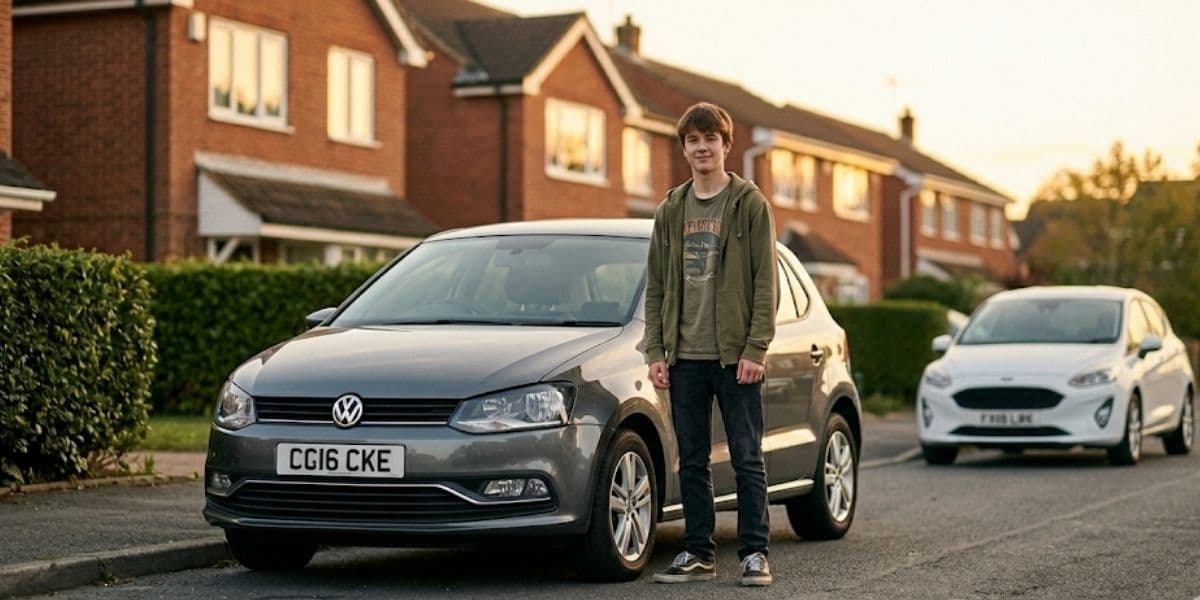
The VW Polo is one of the UK's default first cars and that pushes up insurance costs. Insurers' algorithms have learned over the yearsthat a 17 year old behind the wheel of a Polo is statistically a high-claim event, so even a group 1 Mk6 EVO can quote over £3,500 for a newly qualified driver. The Polo is one of the popularity paradox cars that attracts a high premium relative to the insurance group. By age 20 the same car is more like £800ish.
Best buy for an experienced young driver (has a couple of years NCD): a 2017-2021 Mk6 1.0 TSI 95PS in SE or Match trim (group 8). Turbo torque for safe motorway merges, modest cosmetics, sensible premium.
Best buy for absolute lowest premium: a Mk5 or Mk6 1.0 EVO 80PS in S/SE (group 1). Slow but statistically low risk.
Top overall pick: the Mk5 or Mk6 Beats Edition (groups 1-2). Looks like an R-Line, awesome stereo and low premiums.
Avoid: the Mk7 Black Edition (group 17), any GTI (groups 25-30), the Mk5 BlueGT (group 23) and any 110-115PS turbo trim. Always run quotes against the equivalent Skoda Fabia and SEAT Ibiza too. Same platform underneath but a cleaner claim pool therefore it can be £200-£500 cheaper.
Insurance quirks for the Volkswagen Polo
The Polo's quirks are mainly from its many years of young driver claim history.
- Popularity paradox. Thousands of UK 17-21 year olds have been buying and crashing Polos for years. A group 1 Polo for a 17 year old often quotes higher premiums than a more powerful, less popular car in a higher group.
- The Black Edition: the Mk7 1.0 TSI 115PS Black Edition is group 17. Get the Beats Edition instead for a similar look with a group 2 rating.
- Generational Tech Inflation: the Mk6 1.0 MPI SE was group 1. The direct successor Mk7 1.0 MPI Life is group 3. Standard digital cockpit and matrix LEDs raised the baseline across the entire Mk7 range.
- Beats Edition: Awesome 300W audio system and larger alloys. Looks like an R-Line. With the slow 75-80PS non-turbo engine it stays in groups 1-2.
Mk4 (2002-2009)
The Mk4 (2002-2009) is a cheap way into a Polo in 2026, you can get one around £1,500-£3,500. Insurance groups span from 3 (1.2 MPI S) to 17 (1.9 TDI Estate).
Three engines for young drivers are the 1.2 MPI 65PS which is a three-cylinder petrol, slow but mechanically simple. Insurance group 2-4 depending on year. The 1.4L 75PS petrol in S trim is interesting because it sits in group 7 but might still quote cheaper than the 1.2 MPI for a 17 year old. The actuarial pool for the 1.4L is older drivers, not first-time drivers. The 1.4 TDI 75PS diesel in SE trim is a quirky case: pre-2007 cars sit in group 9, post-2007 cars in group 15 after a Thatcham re-rating. Same engine, six insurance groups difference.
Avoid the 1.9 TDI Estate (group 17). A powerful engine, no autonomous safetey tech and no Thatcham discount.
The Mk4 has no GTI variants in scope here. The Polo GT and 9N3 GTI (1.8T) are technically Mk4 era but rare on the second-hand market and land in groups 21+ when they do appear.
Watch the 1.2 MPI engine itself, not the insurance group alone.
The EA111 1.2 three-cylinder is the cheapest Polo ever sold but it has well-documented mechanical failures: electronic throttle body failures, timing chain stretch, recurring EPC warning lights. Owner forums are full of teenagers who saved £300 on the insurance and lost £1,000+ on EPC sensor failures and clearing fault codes within their first year. If you go Mk4, prioritise a full service history and avoid 1.2 MPIs with 80,000+ miles unless the timing chain has been done.
The 1.4 TDI SE late models (group 15) are good cars but the Thatcham re-rating in 2010 bumped them six insurance groups. Confirm the actual quoted group before committing.
Cheapest to insure(Groups 1–5)
Insurance groups 1-5. The cheapest tier on the road for a young driver. Look here first.
1.2 MPI 65PS — S
Group 3The cheap Mk4 spec. Group 2-4 depending on year. Slow but mechanically the simplest Polo on the road.
Mid-range insurance(Groups 6–10)
Insurance groups 6-10. Still affordable for a young driver, especially with an experienced named driver on the policy.
1.4L 75PS Petrol — S
Group 7Bigger engine, less aggressive demographic. Often quotes cheaper than the 1.2 MPI for a 17 year old.
1.4 TDI 75PS Diesel — SE (early)
Group 92002-2007
Pre-2007 diesel. Older diesel pool keeps real quotes lower than the headline group suggests.
More expensive to insure(Groups 11–20)
Insurance groups 11-20. Not recommended as a first car. Premiums for under 25s typically run £3,000+ a year.
- 1.4L 75PS Auto Petrol — Group 11 (Standard auto) — Old four-speed auto. Repair complexity drives the four-group jump versus the manual.
- 1.4 TDI 75PS Diesel — Group 15 (SE (late)) — Same engine as the early SE, six groups higher after Thatcham re-rating. Avoid.
- 1.9 TDI 90PS Estate — Group 17 (SE Estate) — The torque, the body style and the lack of modern ADAS push it here. No active safety means no Thatcham discount.
Mk5 (2009-2017)
The Mk5 (2009-2017) is the most popular used Polo on the market right now and the one most parents will end up looking at. Insurance groups span 1 (1.0 EVO S) to 29 (1.8 TSI GTI).
Two cheapest-tier picks stand out. The 1.0 EVO 65PS S sits in group 1, the absolute lowest possible, but only on facelift cars from 2014 onwards. Slow. Three cylinders, no turbo. Tough to merge onto motorways without pushing the engine hard. The 1.0 MPI 75PS Beats Edition is great if you can find one. Created with the audio brand, it has a 300W sound system, bigger alloys, smart upholstery and decals. Looks like an R-Line but stays in group 2 because the engine is still without a turbo.
The mid tier is a practical pick. The 1.2 TSI 90PS Match (group 8) gives you turbo torque without the R-Line sportiness tax. The 1.6 TDI 80PS SE (group 6) is the diesel base spec, 65+ mpg real world, surprisingly cheap to insure because of the older diesel demographic. Typical premium on a group 3-5 Polo runs £1,250-£2,500 for a 17-19 year old, dropping to £820-£1,025 at age 20 with a year or two of no claims discount.
The Mk5 has no entries in the expensive band (groups 11-20). The line jumps straight from the 1.6 TDI 95PS SEL at group 9 to the BlueGT at group 23. If your young driver wants a Mk5 they're either in a sensible MPI/EVO/TDI or they're staring at a hot hatch, with nothing in between.
Two specific Mk5 variants to watch out for.
First: the 1.4 TSI ACT BlueGT (group 23). Volkswagen marketed this aggressively as the eco-Polo: 150PS plus active cylinder deactivation for 50+ mpg cruising. The marketing landed with young drivers who wanted the fuel economy but it's a high performance car and insurance quotes reflect this. Quotes routinely exceed £3,500 a year for an 18 year old. Skip.
Second: any GTI. The pre-facelift 1.4 TSI Twincharger 180PS (2010-2014) sits in group 30. The facelift 1.8 TSI 192PS (2015-2017) sits in group 29. Keen young drivers will have to wait a few years. Standard insurers won't quote under 25 on either. Specialist policies start at £5,000.
Cheapest to insure(Groups 1–5)
Insurance groups 1-5. The cheapest tier on the road for a young driver. Look here first.
1.0 EVO 65PS Petrol — S
Group 12014-2017
Group 1 on a current-shape Polo. Lowest possible. Slow on motorway merges, watch the telematics flag.
1.0 MPI 75PS Petrol — Beats Edition
Group 22015-2017
The sleeper pick. 300W audio, larger alloys, decals. Looks like an R-Line. Insures like a base S.
Mid-range insurance(Groups 6–10)
Insurance groups 6-10. Still affordable for a young driver, especially with an experienced named driver on the policy.
1.6 TDI 80PS Diesel — SE
Group 6Diesel base spec. 65+ mpg real world. Older diesel demographic keeps quotes friendly.
1.2 TSI 90PS Petrol — Match
Group 82014-2017
Turbo punch without the R-Line tax. Genuine motorway capability for a young driver.
1.6 TDI 95PS Diesel — SEL
Group 92014-2017
Higher-output diesel in mid-trim. Solid pick for a young driver doing 8,000+ miles a year.
Don't go there(Groups 21+)
Insurance groups 21+. Avoid for a young driver. Standard insurers won't quote under 25. Specialist policies start at £5,000+ a year.
- 1.4 TSI ACT 150PS Petrol — Group 23 (BlueGT) — The eco-trap. Cylinder deactivation tech sold as economical. Insurance reads the 150PS, not the marketing.
- 1.4 TSI 180PS Petrol — Group 30 (GTI (pre-facelift)) — Pre-facelift Mk5 GTI. 1.4 Twincharger. Group 30. Standard insurers will not quote under 25.
- 1.8 TSI 192PS Petrol — Group 29 (GTI (facelift)) — Facelift Mk5 GTI. Newer ADAS shaves one group versus the pre-facelift. Still uninsurable for under 25s.
Mk6 (2017-2021)
The Mk6 (2017-2021) is a great Polo to buy in 2026 if your budget stretches to it and saftey is a priority. It introduced the MQB-A0 platform shared with the Skoda Fabia, SEAT Ibiza and Audi A1. It brought standard AEB, lane assist and a five-star Euro NCAP score (94% adult occupant protection).
The 1.0 EVO 80PS in S, SE or SE Tech sits in group 1 and is the defensive pick. Lowest possible group, modern safety hardware, decent equipment. The 1.0 MPI 80PS Match at group 5 is worth the four-group bump if your young driver wants the touchscreen, DAB and parking sensors.
The standout pick across the entire Polo range is the 1.0 TSI 95PS in SE or Match trim (group 8). Turbo torque for safe motorway merges, the modern Mk6 platform with active safety and a sensible group rating. For a 20 year old with one or two years of NCD this is the pick. Typical premium £820-£1,025 at age 20, dropping to £435-£505 by age 30. A 17-19 year old should still budget £1,250-£2,500+ even on this trim, telematics included.
The Mk6 is also where the Beats Edition gets even better. With the 1.0 TSI 95PS engine and the Beats package it stays in groups 1-8 depending on configuration, while looking sporty with an awesome sound system.
The Mk6 R-Line (sporty trim).
The 1.0 TSI 115PS R-Line sits in group 12. The mechanically identical 1.0 TSI 115PS SEL sits in group 10. Two groups for the body kit, larger alloys and aggressive bumpers. The R-Line styling kit signals "modification-friendly" to underwriters even on factory-stock cars, and the cosmetic parts are expensive to replace after a kerb shunt.
If your young driver wants the R-Line look, the cheapest workaround is the 1.0 MPI 80PS R-Line on the Mk7 (group 5). Same look, much cheaper to insure, far less power. Or a Beats Edition.
Skip the Mk6 GTI+ (group 28) for under 25s. Cheap on the used market, uninsurable in practice.
Cheapest to insure(Groups 1–5)
Insurance groups 1-5. The cheapest tier on the road for a young driver. Look here first.
1.0 EVO 80PS Petrol — S / SE / SE Tech
Group 1Group 1 with AEB, lane assist and a five-star Euro NCAP rating. The defensive pick.
1.0 MPI 80PS Petrol — Match
Group 5Match adds the touchscreen, parking sensors and DAB on the cheap MPI engine. Group 5 is the ceiling.
Mid-range insurance(Groups 6–10)
Insurance groups 6-10. Still affordable for a young driver, especially with an experienced named driver on the policy.
1.0 TSI 95PS Petrol — SE
Group 8The all-rounder. Turbo torque for safe motorway merges, group 8 for affordable premiums.
1.0 TSI 115PS Petrol — SEL
Group 10Same engine block, higher state of tune. Two groups up for the extra 20PS.
More expensive to insure(Groups 11–20)
Insurance groups 11-20. Not recommended as a first car. Premiums for under 25s typically run £3,000+ a year.
- 1.0 TSI 115PS Petrol — Group 12 (R-Line) — Same 115PS engine as the SEL, two groups higher for the body kit, alloys and contrast roof.
Don't go there(Groups 21+)
Insurance groups 21+. Avoid for a young driver. Standard insurers won't quote under 25. Specialist policies start at £5,000+ a year.
- 2.0 TSI 200PS Petrol — Group 28 (GTI+) — Hot hatch. Specialist policies only for under 25s. Premiums clear £5,000.
Mk7 (2021-present)
The Mk7 (2021-present) is the current Polo, facelifted in 2022 and again in 2023 with the 207PS GTI Edition 25. The MQB-A0 platform carries over from the Mk6 with mostly cosmetic and tech updates.
The big change for insurance is Generational Tech Inflation. Standard digital cockpit, matrix LED headlights and an updated infotainment system pushed the baseline group up across the entire range. The Mk6 1.0 MPI SE was group 1. The direct successor Mk7 1.0 MPI Life is group 3 with auto, group 4 with manual. Same engine, same body, three to four groups higher because the cluster behind the steering wheel costs £900+ to replace instead of £80.
The cheapest viable Mk7 is the 1.0 MPI 80PS Life (group 3-4). The R-Line trim with the same engine sneaks into group 5. Both are sleeper-cheap relative to their kerb appeal. Typical premium on these group 3-5 variants: £1,250-£2,500+ for a 17-19 year old, £820-£1,025 at age 20, £435-£505 at age 30. By age 40+ you're looking at £410-£440. The Polo costs less to insure than to fuel.
For a more capable young driver, the 1.0 TSI 95PS Life (group 9) mirrors the Mk6 95PS SE pick. The 1.0 TSI 110PS variants jump three groups to group 12 across all trims.
The Mk7 has one variant that sits in a category of its own: the Black Edition.
Mk7 1.0 TSI 115PS Black Edition. Group 17. Five groups higher than the mechanically identical 1.0 TSI 110PS Style (group 12). The reason is purely cosmetic. Black alloy wheels, gloss-black body styling kit, exclusive interior trims, dark headlight surrounds. Thatcham assess parts pricing and replacement complexity, and the bespoke black plastic and specialised paintwork pushes minor parking knocks from £600 to £2,000+ to fix. Skip.
Two more non-starters for a young driver: the GTI Edition 25 (group 25, only available for under 25s on specialist policies) and the standard GTI (group 27). The Edition 25 is a slightly lower group because limited-edition cars get marginally cleaner risk profiles because they tend to be bought by older enthusiasts who garage them. Both are uninsurable for the typical newly qualified driver.
One regulatory note for Mk7 buyers: cars first registered after August 2024 are transitioning onto the new Vehicle Risk Rating (VRR) system, which replaces the 1-50 ABI groups with five separate scores (damage, repair, theft, theft of vehicle, performance). Most insurers still quote against the legacy group for now, but VRR will start showing up in price comparison sites over the next 12-18 months. The variant rankings on this page will hold. The inputs feeding both systems are largely the same. The absolute group number stops being the headline metric.
Cheapest to insure(Groups 1–5)
Insurance groups 1-5. The cheapest tier on the road for a young driver. Look here first.
1.0 MPI 80PS Petrol — Life
Group 3The cheapest Mk7. Group 3 with auto, group 4 with manual. Standard digital cockpit and Apple CarPlay.
1.0 MPI 80PS Petrol — R-Line
Group 5Sleeper pick. R-Line styling with the anaemic 80PS engine. Group 5 despite the sport bumpers.
Mid-range insurance(Groups 6–10)
Insurance groups 6-10. Still affordable for a young driver, especially with an experienced named driver on the policy.
1.0 TSI 95PS Petrol — Life
Group 9The Mk7 pick for an experienced young driver. Turbo torque, modern tech, mid-tier premium.
1.0 TSI 95PS Petrol — Style
Group 10Same engine as Life. Style adds matrix LEDs and 16 inch alloys. One group jump for the trim.
More expensive to insure(Groups 11–20)
Insurance groups 11-20. Not recommended as a first car. Premiums for under 25s typically run £3,000+ a year.
- 1.0 TSI 110PS Petrol — Group 12 (Life) — 110PS variant adds three groups versus the 95PS Life on the same trim level.
- 1.0 TSI 110PS Petrol — Group 12 (Style) — Same group as the 110PS Life despite the trim upgrade. Matrix LEDs do not penalise here.
- 1.0 TSI 115PS Petrol — Group 17 (Black Edition) — The five-group jump from Style. Black alloys, body kit, exclusive interior. Repair costs do the damage.
Don't go there(Groups 21+)
Insurance groups 21+. Avoid for a young driver. Standard insurers won't quote under 25. Specialist policies start at £5,000+ a year.
- 2.0 TSI 207PS Petrol — Group 25 (GTI Edition 25) — Limited-run GTI. Rarer buyers, slightly cleaner claim pool, marginally lower group than the standard GTI.
- 2.0 TSI 207PS Petrol — Group 27 (GTI) — Standard hot hatch. Specialist policies only for under 25s. Premiums clear £5,000.
Still considering a Volkswagen Polo? Read the full review before you buy →
Frequently asked questions
Is a Volkswagen Polo cheap to insure for a 17 year old?
Cheap on paper, often expensive in practice. The Mk5 and Mk6 1.0 EVO sit in group 1, theoretically the lowest-premium tier on UK roads. The aggregate figure for a group 3-5 Polo on a 17-19 year old runs £1,250-£2,500+ a year with telematics. Without a black box, real-world quotes routinely come in at £3,500-£8,500 and have been documented as high as £10,000 on automotive forums. This is the popularity paradox. The Polo is the most common first car in the UK, so insurers' algorithms have learned that the chassis itself accumulates a toxic claim profile. A black box telematics policy, a parent as named driver, or pivoting to a less-popular VAG sibling (Skoda Fabia, SEAT Ibiza) are the realistic ways down. Choosing a different Polo trim won't fix this.
Which Volkswagen Polo variants should young drivers avoid?
Three categories. First, the GTI in any generation. Mk5 1.4 TSI GTI pre-facelift (group 30), Mk5 1.8 TSI GTI facelift (group 29), Mk6 GTI+ (group 28), Mk7 GTI (group 27). Standard insurers won't quote under 25 on any of them; specialist policies start at £5,000. Second, the Mk5 BlueGT (1.4 TSI ACT 150PS, group 23). Marketed as an eco-model, the actuarial reality is a 150PS car. Skip. Third, the Mk7 Black Edition (1.0 TSI 115PS, group 17). Five groups higher than the mechanically identical Style trim because of the body kit and black alloys. Also avoid any 1.0 TSI 110-115PS variant on the Mk7 (group 12+) and the Mk6 1.0 TSI 115PS R-Line (group 12). For absolute lowest premium, stick to the Mk5/Mk6 1.0 EVO S/SE (group 1) or the Mk7 1.0 MPI Life (group 3-4).
Is a Volkswagen Polo cheaper to insure than a Ford Fiesta or a Vauxhall Corsa?
They're in a similar bracket and they all suffer the same popularity paradox. The Fiesta and Corsa generate the highest first-car claim volumes in the UK, the Polo follows close behind. For equivalent base trims, real-world quotes on a Mk6 Polo 1.0 EVO SE typically come in £100-£300 above a Mk8 Fiesta Style 1.1 and roughly even with a Gen E Corsa Sting. Where the Polo wins: the Beats Edition has no direct Fiesta or Corsa equivalent at that combination of kerb appeal and group 1-2 rating. Where the Polo loses: the Fiesta has the Mk8 1.1 Ti-VCT Trend (group 2) as a clean cheap option, and the Corsa Gen E Griffin (group 4E) is arguably the strongest single insurance buy in the segment. Pick on condition, service history and 5-door layout, not on badge.
Why are the Skoda Fabia and SEAT Ibiza often cheaper to insure than the Polo despite being identical underneath?
They sit on the same MQB-A0 platform, use the same 1.0 MPI and 1.0 TSI engines, the same DSG and manual gearboxes and have equivalent Euro NCAP safety scores. The only meaningful difference is who buys them. Skoda Fabias attract a substantially older, more risk-averse demographic, so the actuarial pool generates fewer first-year claims. SEAT Ibizas sit somewhere in between. Insurers' algorithms read the model code, look up the typical owner profile and price accordingly. A 17 year old will routinely get a £200-£500 cheaper quote on a Fabia than on a mechanically identical Polo. If your young driver is open to it, the Fabia is the smarter financial pick. If only a Polo will do, the popularity premium is the cost of the badge.
What does the "E" suffix mean on a Polo's insurance group?
The letter after the group number is Thatcham's security rating. E stands for "Exceeds". The alarm, immobiliser and locking systems on that variant are better than the baseline expected for its group, so Thatcham has already lowered the numeric group rating as a reward. A is Acceptable (meets standard). D is Does Not Meet (security is deficient, group rating raised as a penalty). U is Unacceptable (insurers may refuse cover entirely). P is Provisional (insufficient data at launch). The Mk7 Black Edition is rated 17E. The numeric 17 already includes the security uplift, so the E doesn't compound, but some underwriters apply a small additional discount in their pricing model. When two variants are otherwise equivalent, always pick the E-suffix version.
Should my young driver get a black box (telematics) policy on a Polo?
For 17-19 year olds, yes. There is no realistic alternative. A standard comprehensive policy on a Mk6 1.0 EVO SE without a black box frequently exceeds the entire used purchase price of the car. As Greg Wilson, insurance expert at Quotezone, puts it: "A black box policy is the biggest single lever a new driver has, allowing them to prove their specific driving style rather than being priced against the disastrous averages of their age group." Telematics lets the driver prove their own behaviour instead of being priced against the worst average of their age band. Watch the trap, though. The 60-65PS naturally aspirated Polos struggle to merge onto motorways without high revs, which the algorithm reads as aggressive acceleration. Enough strikes can trigger mid-term policy cancellation, which is a permanent black mark that has to be declared on every quote into their thirties. If you're going telematics, pair it with a 1.0 TSI 95PS or above so the engine isn't being pushed hard during normal driving.
Want help finding the right Volkswagen Polo?
Tell us your budget and postcode.
We'll match you with vetted dealers and the right models for your young driver.
Other models to consider
I'm Iain. I started carbi after seeing firsthand the hassle that families go through to put a teenager on the road in a safe and insurable car. More on the about page.